The Pentagon has been the source of news regarding war since 1947, post-WWII. The Pentagon, where the Department of War currently operates, has long granted journalists access throughout military conflicts in which the United States was involved. Now, with Secretary of War Pete Hegseth, the rules have changed. On Friday, March 20th, 2026, a federal judge blocked the restrictions the Pentagon placed on journalists seeking transparency for the world. The Pentagon did not follow the new rules set out. Instead, the Pentagon imposed restrictions on journalists, requiring escorts and the closure of the press wing. The Trump administration has been moving toward a more favorable reporting stance, with right-wing publications having access to the information since the Iran war started. Now, as we are nearly a month into the United States / Israel and Iran war, millions of Americans are asking for answers, but the government is restricting access to information.
Many are calling for the impeachment or resignation of key members of the Trump administration, such as Hegseth, Bondi, and, with Noem losing her position, the American public is one step closer to transparency and core leadership that represents the American interest and the values of the long-standing experiment on democracy in the western hemisphere.
One cool symbol of that relationship was the “Correspondents’ Corridor,” a section of the Pentagon where journalists had desks right next to defense officials. By 2012, people were already saying the corridor was about 40 years old, which would date it to the early 1970s.
That access has always expanded and contracted during conflict, demonstrating the complex relationship between military operations and the media. In the 1991 Gulf War, for example, the military’s use of pools and tightly controlled briefings became a major flashpoint, raising significant questions regarding transparency and information dissemination.
Press-freedom advocates later described the Gulf War as one of the most restrictive modern conflicts for journalists, with the Pentagon channeling information through official briefings and largely limiting independent newsgathering. This careful orchestration of communication was intended to control the narrative and prevent misinformation, yet it ultimately led to widespread criticism from various media organizations and civil liberties groups, who argued that such restrictions undermined the essential role of a free press as a watchdog in a democratic society.
The same battles over access, escort rules, and message control carried into later wars, including Afghanistan and Iraq, where similar restrictions were imposed, often leading to heated debates about the rights of journalists in war zones and the implications for democratic transparency. These debates intensified as technology advanced, enabling citizens to capture and disseminate information instantaneously, thus further complicating the notion of controlled narrative.
The ongoing struggle for journalistic access highlights the tension between national security interests and the public’s right to know, a narrative that continues to evolve with each new conflict, revealing the critical balance that must be struck between safeguarding sensitive information and upholding the foundational principles of democracy. The lawsuit by the New York Times in federal court in Washington, D.C., alleged that the Defense Department’s policy changes last year gave it free rein to freeze out reporters and news outlets for coverage it did not like, in violation of the Constitution’s protections for free speech and due process. The government disputed that characterization and said the policy is reasonable and necessary for national security, arguing that the increasing complexity of modern warfare necessitates such measures to ensure that operational security is not compromised while still attempting to facilitate some level of transparency where possible.
U.S. District Judge Paul Friedman said in his ruling “more important than ever that the public have access to information from a variety of perspectives about what its government is doing”
The memo outlining the changes can be found below:
Carr is the American lawyer who leads the Federal Communications Commission, or FCC. The FCC oversees multiple aspects of American infrastructure related to broadcasting and communication. The router in your home is required to be approved by the FCC, and even the broadcast television you see, which is the old style of TV with an antenna, not cable or streaming. You may have listened to a radio station overseen by the FCC, and even the fiber-optic communication lines across the seafloor are overseen by the FCC. The FCC has a stake in almost all ways news is disseminated. They do not have a say in an independent journalist like The Penny Tribune.
On social media, Carr Stated,
X /
Carr’s September 2025 assault on Jimmy Kimmel was not just another culture-war flare-up. It was a revealing snapshot of how regulatory power can be repurposed into political intimidation. After Kimmel made remarks about the assassination of conservative activist Charlie Kirk, Carr condemned them as “some of the sickest conduct possible” and openly suggested there was a “path forward for suspension.” The consequences came fast: ABC suspended the show indefinitely, while Nexstar and Sinclair pulled it from their stations. Kimmel returned less than a week later, but by then the point had already been made. The threat had landed.
What mattered most was not just Carr’s outrage, but the mechanism behind it. He warned broadcasters that continuing to air the program could expose them to “fines or license revocation from the FCC,” then delivered the kind of line that sounds less like public service and more like a political enforcer flexing state power: “We can do this the easy way or the hard way.”
And that is the real story. Because this did not emerge in a vacuum. Carr has increasingly built a public record that suggests a willingness to blur the line between communications oversight and ideological punishment. The Kimmel episode did not feel aberrational. It felt consistent. Another moment in a broader pattern where the language of regulation is used not simply to govern the public airwaves, but to pressure media institutions, shape editorial behavior, and send a message about who can speak freely without consequence.
That is what makes this bigger than late-night television. When a federal regulator begins sounding less like an independent steward of the public interest and more like a partisan actor willing to weaponize licensing authority, the danger is not just censorship in the formal sense. It is the creation of a climate where media companies begin disciplining themselves before the government ever has to. Fear does the work. Compliance follows. And the public is left calling it oversight when it looks a lot more like coercion.
When Brenden Carr threatened media companies, he was threatening the public to restrict access to information. The threat began with the reporting of the Iran war started by the Trump administration nearly three weeks ago, on February 28th 2026 by media companies that Trump has deemed to be in opposition after the American airstrike of a girls’ school, killing over one hundred and fifty people.
Supporting indepenedent journalism is the right path forward in this instance. The Penny Tribune has no agency to get permission from, we are the press, we will share the truth unfiltered and indicitaive of the stkes of a ever changing corrupt government with facist ideology.
In early 2026, immigration enforcement in the United States had expanded significantly, with increased funding and a shift toward conducting “at-large” arrests in communities. This expansion has resulted in unprecedented detention figures and increased fear among immigrant populations.
Current ICE Statistics (2025–2026)
Since the start of 2025, ICE operations have significantly increased under the current administration’s mass deportation efforts:
– Detention Surge: By January 25, 2026, ICE detained 70,766 individuals, a record high and 75% more than the previous year.
– Arrest Patterns: In 2025, ICE made about 240,000 arrests, more than doubling the 2024 figure, with a 600% rise in “at-large” arrests in communities.
– Criminal Records: Despite claiming to target “criminal illegal aliens,” data shows 74.2% of detainees have no criminal convictions. Non-citizen immigrants make up only 14% of the population.
– Fatalities: 2025 was the deadliest year for ICE detention, with 32 deaths. By mid-February 2026, there have been 6 deaths and 2 fatal shootings by agents.
– Funding: The “One Big Beautiful Bill Act” of 2025 allocated $45 billion for detention expansion, enabling ICE to operate up to 135,000 detention beds through 2029.
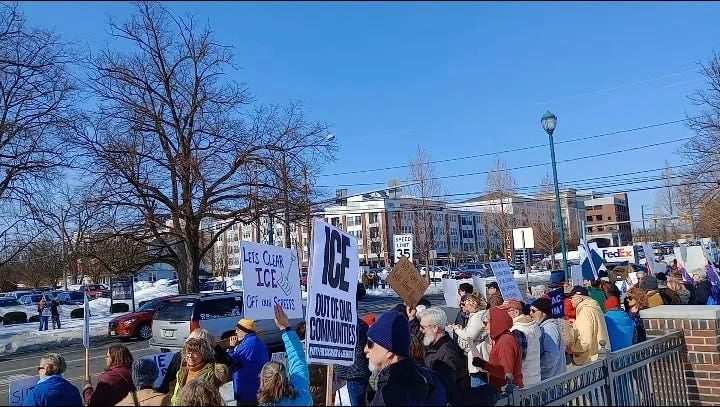
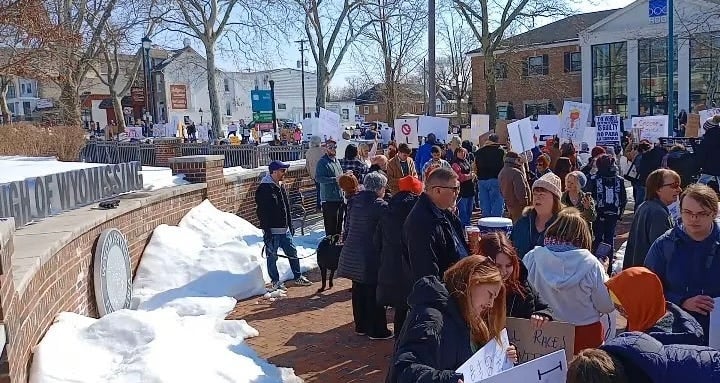
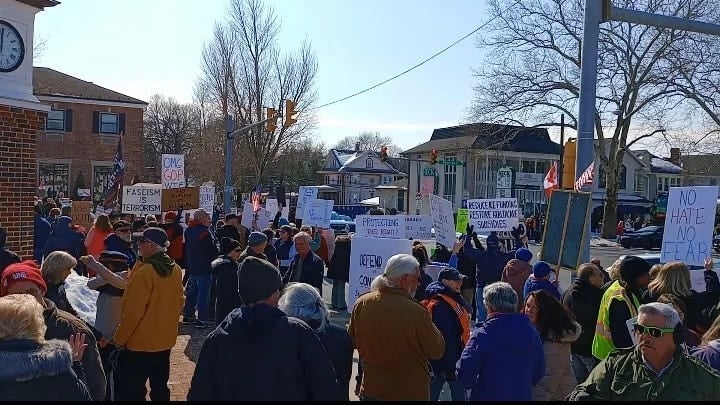
All across the country, people are standing up and voicing their anger toward the Trump Admin. Change is the point of voice, and independent journalists have a duty to share the stories of those who show up and stand out. Now is the time to voice and protest. Millions of working-class people are struggling to make ends meet and are one financial crisis away from collapse, yet the Trump administration has promised financial stability for families.
Trump, during his campaign, promised he would remove violent crime offenders from the communities, but many knew this was a dogwhistle of racism toward black and brown people. Many families are in fear, and the government is attacking the sanctity of American freedom.
Diana L. Adams-Wendler (Protester)Diana L. Adams-Wendler (Protester)Diana L. Adams-Wendler (Protester)
This episode is about the foundations of community action and fighting for the equality of all neighbors.
Penelope explores the opinions and righteous voice of Marra, a first-time protestor from Sparta, NJ, who contributed to the Ledgewood Ice protest, which attracted over 300 people from not only Ledgewood but the greater community, fighting to avoid the construction of a five-hundred-thousand-square-foot ICE facility that the federal government is attempting to implement in Roxbury, NJ.
Marra, Summit NJ Resident, First Time Protester
Marra – Ledgewood, NJ, Protestor, working-class perspective, an audio history of events transpiring for active change in New Jersey, transcribed.
Here is the transcript of the Penny Pointed Podcast between Penelope and Marra:
Podcast Transcript
Penelope: Thank you for tuning in. You’re listening to the Penny Tribune, Penny Pointed Podcast, a podcast about holding politicians accountable, exposing corruption, and sharing the stories and perspectives of working-class people and families. Today, we’re covering topics about ICE raids and protests happening across the state. My name is Penelope. I’m here with Marra, who attended the Ledgewood protest, and we’re going to talk about the outcomes and opinions and what to do in situations like this. So, Marra, thank you so much for giving me your time today. And first, I wanted to start with where you’re located, how you found the protest, and what has been your journey politically with activism.
Marra: Sure, no problem. Thank you for checking in. I’m actually a resident of Sparta, New Jersey, so I live in Sussex County, which is very well known as a red county. And I found the protest through Sussex Visibility Brigade, which my friend introduced to me, actually, pretty recently. I would say that I haven’t really been looking too far into where I can find such activism in our county because, again, it’s red. But when I saw this protest, this was actually my first protest I ever went to. So this is like a new thing for me to really start stepping out of my comfort zone and showing up and speaking up more just because of what we’ve seen in the last year in our country and with what this protest in Ledgewood was for, protesting against the potential sale of a warehouse in Roxbury that would become a detention center for ICE and what that would do to northern New Jersey, not just the town of Roxbury, but all of the neighboring towns in New Jersey. I just felt like I needed to be there. I needed to see other like-minded people outside with me, so I didn’t feel so alone in my fears about what’s been going on.
Penelope: Yeah, that’s understandable right now. There’s so much uncertainty, and I mean, I’m sure you saw everything in Minneapolis with Operation Metro Surge, and in New Jersey, ICE activity is picking up like extremely rapidly, and we’ve already had a shooting in New Jersey. Yeah, so things are escalating, and so many people are scared like you, and so many people are just frightened about what’s going to happen and angry, like rightfully so. And so, did you always live in Sparta? Growing up, what were your views on immigration and political policies? Like, how did you develop into these viewpoints to understand, like, social justice and getting involved?
Marra: So I grew up in Sussex County. I’m originally from Vernon. My husband is originally from Vernon, and we moved to Sparta once we got married. You know, I don’t know. I feel like growing up in Sussex County, there was this bubble, and I think it also depended upon how you were raised. I wouldn’t say that I wasn’t aware of how problematic our county and our country could be, but I definitely will admit to my privilege and my ignorance for a very long time. I’m fine with saying that. I think it’s honesty. But I do feel like I was always someone who couldn’t understand why people were so cruel and why racism was still so prominent. I went to college in New York City. I went to a technical school where people from every part of the world came. You know, it was a big LGBTQIA school. I was just immersed around people and just nothing any of them can do, whether you’re black, you’re brown, you’re gay, you’re bi, or trans, I don’t understand how people are so offended and can be so cruel. And I just think seeing it more now, seeing an administration that’s governing our country and using such vile language and speech against such large communities and taking all of the racism that’s been under the surface and letting it boil to the top and letting it be almost okay is just, it’s abhorrent and I guess I’m just at this point where the anger is, I can’t fully contain it anymore and it’s just being around so many people whose heads are down, they don’t want to disrupt status quo. It’s taken a lot of me looking inside myself, distancing from family and friends. So like I think there was always a little bit of the angry person in me wanting to fight back against people hurting other people and I just now is the time that it calls for more of us to stand up.
Penelope: Would you say everyday people and us being part of the working class, like what would you say our duty is to stand up and with the non-citizen population being less than 14% of violent crime or criminal offenders and Donald Trump’s admin saying that they’re only going after criminals, but now we see just like families being torn apart like what happened in Lindenwold where ICE decided to visit a bus stop for fourth and fifth graders and families were running, parents were alerting their neighbors? And how do you think this is all affecting, like, families and just the outright propaganda and fascism that’s happening right now?
Marra: I would hope that families, especially in my area, who I feel generally don’t talk about anything, are starting to wake up more to it. And look to just what was happening in Minnesota the last two months to see the damage that is being done. I mean, everything is being recorded. I cannot understand how people can look away from a video of a mother holding a baby as their dad is being dragged off. You know, I just it’s crazy to me and I would hope that I would hope that I could have more space in feel talking to coworkers or friends of friends to just say you need to take a look around you, like this could be anyone and everyone in your community and it’s affecting all of us because of the way that they’re being treated and the violent way with which they’re being kidnapped off of the street. It directly impacts all of us.
Penelope: When you were at the protest, what was the atmosphere like? Did you talk to anyone? What were the key points that were addressed?
Marra: So being my first protest, a little nervous, wasn’t sure what to expect. I actually thought it was going to be a smaller protest based off of just looking at the ad on Instagram, seeing that there weren’t a lot of likes. But showing up there, I went with two friends, and we got there, and it was larger than I thought it was going to be, and it was peaceful, and everyone was friendly. Everyone was, you know, willing to talk about their fears about what this if the sale of the warehouse could go through could mean. There were about four speakers. They were either from a union or a councilperson. One was a councilperson from Sparta who spoke on behalf of himself, not for Sparta Township. And they just rolled out the facts about what this could mean for Roxbury and the neighboring towns from an environmental standpoint, from a financial standpoint, you know, moral and ethics aside. So I think that was really important for them to reiterate that point of why we went there on Monday for the protest. And you know, like there was for every one car that drove by flipping us off or yelling bad words at us, there were ten more cars honking in support and that felt to me like that I just it gave me some hope we’re not alone. People that feel afraid and angered and worried and concerned that there are groups of us that are feeling it together and I think just showing up on Monday probably maybe 300 people, I don’t know exactly. I think seeing that number was was really great.
Penelope: How do you think protests like this inspire change in communities to take action?
Marra: I think the more people that show up and the bigger the protests are, I think this woman standing next to me on Monday, she had made a comment that sometimes like she feels that maybe protests don’t always work, but at least showing up in numbers it shows the people that we’re paying to govern us and pass our laws, it shows them that we’re watching them and that we see them. We’re like the checks and balances for them. So I think the more people that can make time to do protests or you know find other avenues of activism, I know Sussex Visibility Brigade, they were doing like a craft night where it was assembling whistles and things like that. Doing those small things and getting larger numbers to do them shows that we’re watching government and we’re looking for change.
Penelope: What changes do you think need to happen and how can you inspire your community members to make those changes?
Marra: Changes… a lot. I mean I guess when I’m looking at Sussex County, it’s still very antiquated in old thinking up here. I think a younger generation will push for more progressive thinking and I already see it with my friend’s kids, my nieces and nephews, they’re whole more accepting of everyone and I think we need to get I think we need to get younger people in leadership roles. They bring fresh perspective. I think they have, you know, a more open view of the world and I would hope that now that I’ve attended one protest that I could attend more and become more active, maybe with Sussex Visibility Brigade, and just step up more. I know it’s holding myself accountable and stepping up more.
Penelope: Awesome. Yeah. What do you think independent journalists like me, what is our responsibility to like show up for communities and tell the stories of what’s happening?
Marra: I think independent journalists like you are more important now than ever just based off of how much information we’re not getting from bigger journalists because their information is getting suppressed. I think it’s important that independent journalists remain open and honest, do their due diligence with research and you know show up for the people because I feel like bigger news now, I can’t I you can’t rely on them for it. And I came across you on Threads, seeing that you’re from New Jersey, seeing that you’re reporting what’s happening locally around us. You know, I’m not going to get that from a big news channel. I only get it from independent people.
Penelope: Yeah, yeah, that’s journalism is under attack right now by the Trump admin and it’s such a scary place to be but it’s definitely worth it to make sure truth is out and do you think the politicians in New Jersey are actually representing the people like Corey Booker and Governor Cheryl?
Marra: I’m wary. I’m not feeling great about Booker right now. I feel like I’m seeing that a lot. It just feels like he’s become very performative and I don’t know when that actually changed. My hope is that Governor Cheryl will be a good governor. I do like that she’s already been proactive as far as some of the executive orders and initiatives she’s taken with ICE in New Jersey. Can only hope for the best. But yeah, I there are some New Jersey reps that I am a little bit worried as far as where they really stand and I think Corey Booker is the biggest one because he’s been around for so long. I sometimes think that maybe and I voted for him a few times so I think that I don’t know is it that you get to a certain point and you’ve exhausted your seat and it’s time to let somebody else step up? I think there’s a lot of questions he needs to answer. I don’t know if he’s doing that because he’s on a book tour. But I think that people of New Jersey want answers. I know we’re a blue state but we have a lot of red areas and we just need we just we just need answers.
Penelope: Yeah. What are some small changes communities can do to protect the non-citizen population and what has been your personal experience with someone who’s non-citizen?
Marra: So I think well, I’ll take it from a business standpoint. I work in HR, so we deal with, you know, people and their documents coming in, making sure that they’re correct and stressing for them to get appropriate documents and following the correct path to get them. I think for small towns and communities up where I live, I think it’s a matter of speaking up, definitely getting more active in the community. That’s something I’m not and I think it’s hard too because I don’t have children. So in towns where I live, it feels like the people that run the show are parents. So for someone who’s child-free, it feels a little isolated.
Penelope: Yeah. So much is going on and these protests are making news and I mean, Minnesota made national news, but we’re seeing unprecedented numbers with ICE in New Jersey. And I know the Trump admin has been retaliating because Jack didn’t win the election and I just want to thank you for taking time to answer this call and give your perspective. The working-class view is so important with everything happening. We are the voters and our politicians should show up for us and govern and make policy and right now so much is going on with non-citizen people and it’s just it’s horrendous how they’re being treated. So I echo everything and I’m so thankful for you sharing your views and for everyone listening, Marra shared all of her views from Ledgewood and why we all need to be involved. So thank you for taking this call.
Marra: Thank you for speaking with me. Hopefully didn’t sound too ridiculous, this was stepping out of my comfort zone, so…
Penelope: Yeah, it’s I it was great conversation and I think people are going to resonate with everything you said. More people are supportive of rights for non-citizens as opposed to the radical MAGA ideology that is so inhuman.
Marra: Yeah.
Penelope: All right. Well, we can end here. I’m so excited to share what you have to say and the pictures you shared and everything and I’m so excited you got involved and you’re speaking up. It’s so important for working-class people to be heard and I can’t wait to share this with everyone.
Estefany María Rodríguez Florez fled death threats in Colombia, followed all legal procedures in the U.S., and was detained by federal agents the morning after covering an ICE raid. A federal judge is now demanding answers, and so are we.
Let’s clarify what actually happened, as the government is trying to obscure it.
On March 4, a Nashville Fugitive Operations Team — a surveillance unit, not a patrol — followed Rodríguez, her husband, and their seven-year-old daughter from their home. They waited until the daughter was at her bus stop, then surrounded their car, which bore their news outlet Nashville Noticias logo, and took Rodríguez into custody. No warrant was shown, and her husband, a U.S. citizen, wasn’t given an explanation.
Her name is Estefany María Rodríguez Florez. The day before her arrest, she was reporting on ICE agents detaining a man in a Nashville parking lot.
This is not coincidental. Her lawyers, the Tennessee Immigrant and Refugee Rights Coalition, a retired immigration judge, and a federal judge — who has ordered the government to clarify her detention by Monday — all agree something is amiss.
Who Is Estefany Rodríguez, and Why Does That Matter?
Rodríguez, 35, holds a journalism degree from Colombia, where she reported on government corruption, armed groups, and agencies, which earned her death threats. These threats were serious enough to warrant police involvement and a security detail. Clearly putting a target on Rodríguez.
When her daughter was one, she moved legally to the U.S. on a tourist visa in March 2021. Before its expiry, she filed for asylum internally, as permitted by law, and married a U.S. citizen, applying for permanent residency. During a time when most of the government was stressed from a pandemic she followed the rules to stay. Yet the government now is trying to force her to leave. She now has a work permit valid through 2029.
In 2022, she joined Nashville Noticias and reported for Univision 42 Nashville, covering social issues, families, health, police, and immigration — especially ICE enforcement in Middle Tennessee. The TIRRC praised her for courageously telling about the harms caused by ICE. Journalism written for the voice of Latino communities proves to bring notice and awareness in an understanding way that Latino readers engage with when participating in their community and exercising political rights.
Her attorney, Joel Coxander, noted that she always understood she might be detained simply for being present at enforcement operations, yet she reported on them anyway. ICE classified her as a fugitive.
Why the Location of Her Arrest Matters
Rodríguez was detained at a gym on Murfreesboro Pike — a diverse community in Antioch and South Nashville.
This area’s demographics include 35.3% Black, 32.2% White, and 22.1% Hispanic residents. The Hispanic population here is more than twice Nashville’s citywide average, and a large percentage of schoolchildren are Hispanic, indicating a community shift. Nearly 29% of residents are foreign-born, more than doubling the metro average. Over a third speak a non-English language at home, mostly Spanish. With a large population speaking languages other than English, there is a barrier to every aspect of community use.
The median household income is $72,233, and about 10.7% of families live in poverty. Median household size is slightly above average at 2.5 people. A clear indication of a diverse community and the known threat of ICE activity from the Trump administration.
These are working-class families — including immigrants, many undocumented or in the process of immigration. Rodríguez’s reporting focused on her local community, not outsiders covering a foreign crisis. This distinction is crucial for understanding her work and why the government may have wanted to stop her.
The Setup: Two Appointments ICE Can’t Explain
ICE’s justification for calling Rodríguez a “flight risk” hinges on a story that unravels under scrutiny.
In January 2026, ICE requested her appearance at their Nashville office. Winter Storm Fern canceled the appointment, and ICE rescheduled for February 26. Her husband and her attorney’s office checked, and the agency said she wasn’t in the system and shouldn’t come. A new appointment was set for March 17.
ICE then used these missed appointments to justify her detention and arrest.
Her attorney explained, –
“She’s being told, ‘We’re holding it against you that you didn’t do this thing we told you you didn’t have to do,’”
-and noted her team went to ICE ahead of the appointment.
The Warrant Issue: A Crumpled Photo
When her attorneys challenged the warrantless arrest, ICE responded with a photo of a crumpled warrant dated March 2 — two days before the arrest. The document lacks a file number, and the certificate of service is blank, indicating it was never served.
Records confirm she was never presented with a warrant from the moment she left her home until her detention.
Her lawyers called it an “unserved, unexecuted, and crumpled-into-a-ball warrant,” offering no legal cover. The government disputes this, and a judge is now examining the matter.
Retaliation, Press Freedom, and a Pattern
The Columbia Journalism Review highlighted a concerning pattern: journalists like Rodríguez working for Spanish-language outlets, with less prominence, covering immigrant communities and facing potential risks from enforcement actions.
State Rep. John Ray Clemmons called her arrest alarming, especially given her reporting on anti-immigrant laws. Rebbeca Aguilar, a longtime journalist, emphasized that all journalists must do their work without fear of retaliation.
Her attorneys have asked the court to declare her arrest a First Amendment violation. The case is actively being considered.
Her Current Status and What’s at Risk
Rodríguez is held at Etowah County Jail in Alabama, with plans to transfer her to Louisiana. Her husband, Alejandro Medina III, hasn’t spoken with her since her detention, and he is urgently trying to reunite with her so they can finally take their postponed honeymoon.
Her daughter waits, and her scheduled green card appointment on March 17 can’t proceed while she’s detained.
A judge has demanded the government justify her continued detention in writing by Monday midnight. A hearing could happen as soon as Tuesday.
Understand that ICE detains more people than ever, with over 70,000 held in January 2026 — a 75% increase from the previous year, with higher arrest rates and community arrests skyrocketing. Most detainees have no criminal convictions.
This case exemplifies how enforcement policies affect real lives — in a community along Murfreesboro Pike, where many families are building lives and hopes, now threatened by unjust detention based on a flawed warrant and administrative mishandling.
The court has until Tuesday to rule. We will keep reporting on what unfolds next.
This Black History Month, let’s look at the history of the Black disenfranchisement of a community that built the country we call home.
The struggle and generational trauma passed down in Black Communities started with The Middle Passage. The maritime journey that brought millions of Africans to the Americas was under brutal conditions.
The country was built on the ownership of the people, and the government knew that.
Millions suffered during The Middle Passage, and stories have been passed down through generations, paving the very month we recognize the Black Resistance and protest for equality and equity.
A famous poet, Robert Hayden, wrote the “Middle Passage” in 1962. (Quotes to emphasize the name).
The poem begins by naming the slave ships, which are primarily named Desire, Starlight, and Fortune.
Black People were the cargo. An inhumane act of creating property from humans.
The poem is illuminating. Text within this block will maintain its original spacing when published
Jesus, Estrella, Esperanza, Mercy:
Sails flashing to the wind like weapons,
sharks following the moils of voices
shouting, and the weals, the whirlpools of the dead.
Deep in the festering hold thy father lies,
of his bones New England pews are made,
those are altar lights that were his eyes.
The beginning of the resistance and fight for true freedom.
The poem begins to describe the testimony of traders and finally The Amistad Rebellion.
The Amistad Rebellion in 1839 was a revolt on board the Amistad. Led by Cinqué. Hayden signifies this rebellion as a historical event for the Black Community. The people who were considered cargo fought back to gain humanity.
Poem Excerpt:
But Cinqué!
A night-smelling flower of the desert,
a song of the sun,
a soul who would not be a slave.
In 1787, the Constitution included the Three-Fifths Compromise. A dehumanized, codified count of enslaved people as only being worth 3/5 of a person for legislative representation.
From there followed decades of struggle.
The Civil War is a turning point in the Black Resistance in America. The war was the deadliest in American history, with roughly 750,000 deaths.
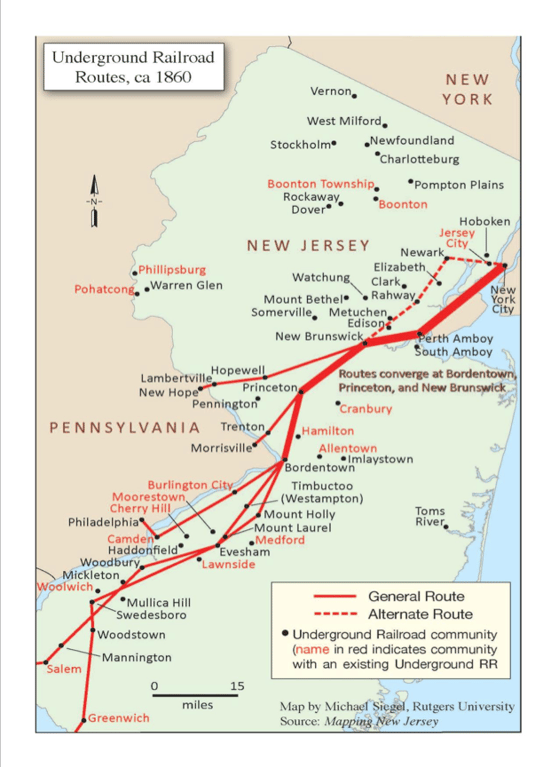
The Underground Railroad operated primarily during the first half of the 19th century, reaching its peak around 1850.
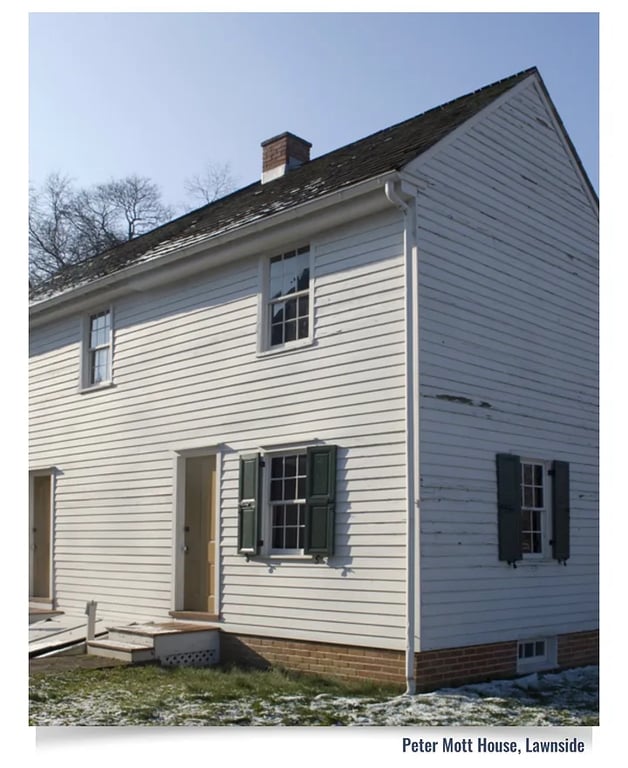
Resistance existed as long as slavery existed in the United States. Organizers began gathering in the late 18th century among Quaker communities in Pennsylvania and New Jersey.
During peak, it is estimated that 1k people per year successfully escaped using the network.
During the fugitive slave act, the federal law required that even in free states, slaves were captured & returned.
New Jersey played a critical role in the Underground Railroad due to its geography. Serving as a vital “bridge” between the slave holding states and the South with the safety of New York City and Canada.
The Greenwich Line crossing was the Delaware Bay, where people landed in Cumberland County or Cape May.
The Jersey shore provided refuge for those moving toward NYC.
Committees called Vigilance were the backbone of the movement, providing food, clothing, and legal services.
Famous conductors include Harriet Tubman (Born in Dorchester County, Maryland), who led 13 trips into Maryland to free enslaved people.
A lesser-known conductor was Abigail Goodwin, a “Birthright Quaker” committed to abolition so strongly that she was eventually ejected from the Orthodox Quaker Meeting in Salem.
Some Quakers felt the Underground Railroad was “too radical” or “broke too many laws.” Abigail disagreed, believing human freedom superseded government decree. Famous conductors include Harriet Tubman (Born in Dorchester County, Maryland), who led 13 trips into Maryland to free enslaved people.
After the war the “Reconstruction” era began from 1865-1877, Black Men saw the right to vote until federal troops withdrew from the south leading to the Jim Crow era a a century of state sanctioned violence which included segregation, disenfranchisement and extrajudicial violence (Lynching, murders, bombings)After the war the “Reconstruction” era began from 1865-1877, Black Men saw the right to vote until federal troops withdrew from the south leading to the Jim Crow era a a century of state sanctioned violence which included segregation, disenfranchisement and extrajudicial violence (Lynching, murders, bombings)
The foundation of Black History Month began in 1926 as “Negro History Week” in February by historian Carter G. Woodson and the Association for the Study of Negro Life and History.
Woodson chose February and the second week to be precise because it encompassed the Birthdays of Abraham Lincoln (Feb 12th) and Fredrick Douglass (Feb 14th)
Two figures celebrated in Black Communities.The foundation of Black History Month began in 1926 as “Negro History Week” in February by historian Carter G. Woodson and the Association for the Study of Negro Life and History.
Woodson chose February and the second week to be precise because it encompassed the Birthdays of Abraham Lincoln (Feb 12th) and Fredrick Douglass (Feb 14th)
The following years, before the shift to a month and the recognition nationally in 1976, were superseded by the civil rights movement. A act of resistance which resulted in rebellions fueled by resisters who dignified themselves as humans.
Thousands of people died.
Two notable Figures include Ross Parks and Martin Luther King Jr.
During the 1976 United States Bicentennial, President Gerald Ford officially recognized Black History Month for the first time at a federal level.
He urged Americans to “seize the opportunity to honor the too-often neglected accomplishments of Black Americans in every area of endeavor throughout history”.
In 1986, it was codified into law.
Law 99-244During the 1976 United States Bicentennial, President Gerald Ford officially recognized Black History Month for the first time at a federal level.
He urged Americans to “seize the opportunity to honor the too-often neglected accomplishments of Black Americans in every area of endeavor throughout history”.
Since 2026 would mark the 100th anniversary of Carter G. Woodson’s original 1926 version, it is the first time a president has not recognized the month in decades.
Donald Trump has caused undue harm to the black community by perpetuating stereotypical culture and racism.
We must all fight to continue this pledge to honor the history of Black People in America and end systemic oppression.