Tag: political misinformation

  • Communities Stand Up: The working class stories of showing up for non-citizens and the fight to hold the Trump Administration accountable

    In early 2026, immigration enforcement in the United States had expanded significantly, with increased funding and a shift toward conducting “at-large” arrests in communities. This expansion has resulted in unprecedented detention figures and increased fear among immigrant populations.

    Current ICE Statistics (2025–2026)

    • Since the start of 2025, ICE operations have significantly increased under the current administration’s mass deportation efforts:
    • – Detention Surge: By January 25, 2026, ICE detained 70,766 individuals, a record high and 75% more than the previous year.
    • – Arrest Patterns: In 2025, ICE made about 240,000 arrests, more than doubling the 2024 figure, with a 600% rise in “at-large” arrests in communities.
    • – Criminal Records: Despite claiming to target “criminal illegal aliens,” data shows 74.2% of detainees have no criminal convictions. Non-citizen immigrants make up only 14% of the population.
    • – Fatalities: 2025 was the deadliest year for ICE detention, with 32 deaths. By mid-February 2026, there have been 6 deaths and 2 fatal shootings by agents.
    • – Funding: The “One Big Beautiful Bill Act” of 2025 allocated $45 billion for detention expansion, enabling ICE to operate up to 135,000 detention beds through 2029.

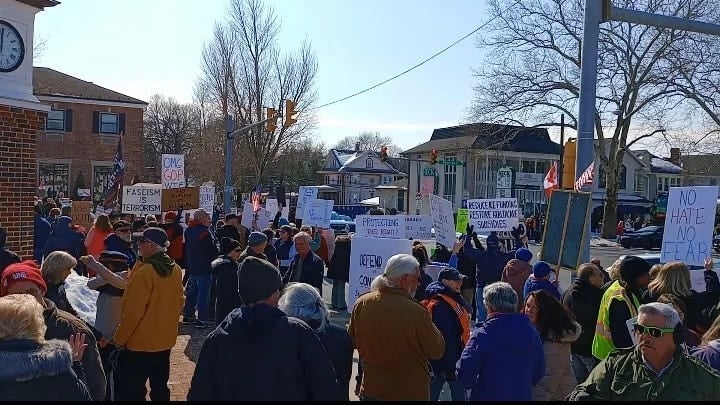
    All across the country, people are standing up and voicing their anger toward the Trump Admin. Change is the point of voice, and independent journalists have a duty to share the stories of those who show up and stand out. Now is the time to voice and protest. Millions of working-class people are struggling to make ends meet and are one financial crisis away from collapse, yet the Trump administration has promised financial stability for families.

    Trump, during his campaign, promised he would remove violent crime offenders from the communities, but many knew this was a dogwhistle of racism toward black and brown people. Many families are in fear, and the government is attacking the sanctity of American freedom.
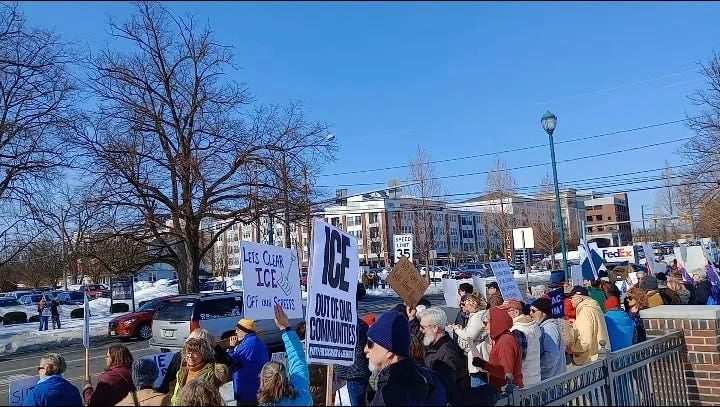
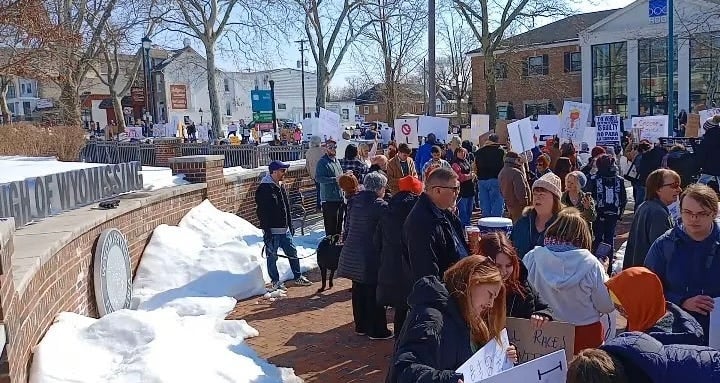
    This episode is about the foundations of community action and fighting for the equality of all neighbors.

    Penelope explores the opinions and righteous voice of Marra, a first-time protestor from Sparta, NJ, who contributed to the Ledgewood Ice protest, which attracted over 300 people from not only Ledgewood but the greater community, fighting to avoid the construction of a five-hundred-thousand-square-foot ICE facility that the federal government is attempting to implement in Roxbury, NJ.

    Marra, Summit NJ Resident, First Time Protester

    Marra – Ledgewood, NJ, Protestor, working-class perspective, an audio history of events transpiring for active change in New Jersey, transcribed.

    Here is the transcript of the Penny Pointed Podcast between Penelope and Marra:


    Podcast Transcript

    Penelope: Thank you for tuning in. You’re listening to the Penny Tribune, Penny Pointed Podcast, a podcast about holding politicians accountable, exposing corruption, and sharing the stories and perspectives of working-class people and families. Today, we’re covering topics about ICE raids and protests happening across the state. My name is Penelope. I’m here with Marra, who attended the Ledgewood protest, and we’re going to talk about the outcomes and opinions and what to do in situations like this. So, Marra, thank you so much for giving me your time today. And first, I wanted to start with where you’re located, how you found the protest, and what has been your journey politically with activism.

    Marra: Sure, no problem. Thank you for checking in. I’m actually a resident of Sparta, New Jersey, so I live in Sussex County, which is very well known as a red county. And I found the protest through Sussex Visibility Brigade, which my friend introduced to me, actually, pretty recently. I would say that I haven’t really been looking too far into where I can find such activism in our county because, again, it’s red. But when I saw this protest, this was actually my first protest I ever went to. So this is like a new thing for me to really start stepping out of my comfort zone and showing up and speaking up more just because of what we’ve seen in the last year in our country and with what this protest in Ledgewood was for, protesting against the potential sale of a warehouse in Roxbury that would become a detention center for ICE and what that would do to northern New Jersey, not just the town of Roxbury, but all of the neighboring towns in New Jersey. I just felt like I needed to be there. I needed to see other like-minded people outside with me, so I didn’t feel so alone in my fears about what’s been going on.

    Penelope: Yeah, that’s understandable right now. There’s so much uncertainty, and I mean, I’m sure you saw everything in Minneapolis with Operation Metro Surge, and in New Jersey, ICE activity is picking up like extremely rapidly, and we’ve already had a shooting in New Jersey. Yeah, so things are escalating, and so many people are scared like you, and so many people are just frightened about what’s going to happen and angry, like rightfully so. And so, did you always live in Sparta? Growing up, what were your views on immigration and political policies? Like, how did you develop into these viewpoints to understand, like, social justice and getting involved?

    Marra: So I grew up in Sussex County. I’m originally from Vernon. My husband is originally from Vernon, and we moved to Sparta once we got married. You know, I don’t know. I feel like growing up in Sussex County, there was this bubble, and I think it also depended upon how you were raised. I wouldn’t say that I wasn’t aware of how problematic our county and our country could be, but I definitely will admit to my privilege and my ignorance for a very long time. I’m fine with saying that. I think it’s honesty. But I do feel like I was always someone who couldn’t understand why people were so cruel and why racism was still so prominent. I went to college in New York City. I went to a technical school where people from every part of the world came. You know, it was a big LGBTQIA school. I was just immersed around people and just nothing any of them can do, whether you’re black, you’re brown, you’re gay, you’re bi, or trans, I don’t understand how people are so offended and can be so cruel. And I just think seeing it more now, seeing an administration that’s governing our country and using such vile language and speech against such large communities and taking all of the racism that’s been under the surface and letting it boil to the top and letting it be almost okay is just, it’s abhorrent and I guess I’m just at this point where the anger is, I can’t fully contain it anymore and it’s just being around so many people whose heads are down, they don’t want to disrupt status quo. It’s taken a lot of me looking inside myself, distancing from family and friends. So like I think there was always a little bit of the angry person in me wanting to fight back against people hurting other people and I just now is the time that it calls for more of us to stand up.

    Penelope: Would you say everyday people and us being part of the working class, like what would you say our duty is to stand up and with the non-citizen population being less than 14% of violent crime or criminal offenders and Donald Trump’s admin saying that they’re only going after criminals, but now we see just like families being torn apart like what happened in Lindenwold where ICE decided to visit a bus stop for fourth and fifth graders and families were running, parents were alerting their neighbors? And how do you think this is all affecting, like, families and just the outright propaganda and fascism that’s happening right now?

    Marra: I would hope that families, especially in my area, who I feel generally don’t talk about anything, are starting to wake up more to it. And look to just what was happening in Minnesota the last two months to see the damage that is being done. I mean, everything is being recorded. I cannot understand how people can look away from a video of a mother holding a baby as their dad is being dragged off. You know, I just it’s crazy to me and I would hope that I would hope that I could have more space in feel talking to coworkers or friends of friends to just say you need to take a look around you, like this could be anyone and everyone in your community and it’s affecting all of us because of the way that they’re being treated and the violent way with which they’re being kidnapped off of the street. It directly impacts all of us.

    Penelope: When you were at the protest, what was the atmosphere like? Did you talk to anyone? What were the key points that were addressed?

    Marra: So being my first protest, a little nervous, wasn’t sure what to expect. I actually thought it was going to be a smaller protest based off of just looking at the ad on Instagram, seeing that there weren’t a lot of likes. But showing up there, I went with two friends, and we got there, and it was larger than I thought it was going to be, and it was peaceful, and everyone was friendly. Everyone was, you know, willing to talk about their fears about what this if the sale of the warehouse could go through could mean. There were about four speakers. They were either from a union or a councilperson. One was a councilperson from Sparta who spoke on behalf of himself, not for Sparta Township. And they just rolled out the facts about what this could mean for Roxbury and the neighboring towns from an environmental standpoint, from a financial standpoint, you know, moral and ethics aside. So I think that was really important for them to reiterate that point of why we went there on Monday for the protest. And you know, like there was for every one car that drove by flipping us off or yelling bad words at us, there were ten more cars honking in support and that felt to me like that I just it gave me some hope we’re not alone. People that feel afraid and angered and worried and concerned that there are groups of us that are feeling it together and I think just showing up on Monday probably maybe 300 people, I don’t know exactly. I think seeing that number was was really great.

    Penelope: How do you think protests like this inspire change in communities to take action?

    Marra: I think the more people that show up and the bigger the protests are, I think this woman standing next to me on Monday, she had made a comment that sometimes like she feels that maybe protests don’t always work, but at least showing up in numbers it shows the people that we’re paying to govern us and pass our laws, it shows them that we’re watching them and that we see them. We’re like the checks and balances for them. So I think the more people that can make time to do protests or you know find other avenues of activism, I know Sussex Visibility Brigade, they were doing like a craft night where it was assembling whistles and things like that. Doing those small things and getting larger numbers to do them shows that we’re watching government and we’re looking for change.

    Penelope: What changes do you think need to happen and how can you inspire your community members to make those changes?

    Marra: Changes… a lot. I mean I guess when I’m looking at Sussex County, it’s still very antiquated in old thinking up here. I think a younger generation will push for more progressive thinking and I already see it with my friend’s kids, my nieces and nephews, they’re whole more accepting of everyone and I think we need to get I think we need to get younger people in leadership roles. They bring fresh perspective. I think they have, you know, a more open view of the world and I would hope that now that I’ve attended one protest that I could attend more and become more active, maybe with Sussex Visibility Brigade, and just step up more. I know it’s holding myself accountable and stepping up more.

    Penelope: Awesome. Yeah. What do you think independent journalists like me, what is our responsibility to like show up for communities and tell the stories of what’s happening?

    Marra: I think independent journalists like you are more important now than ever just based off of how much information we’re not getting from bigger journalists because their information is getting suppressed. I think it’s important that independent journalists remain open and honest, do their due diligence with research and you know show up for the people because I feel like bigger news now, I can’t I you can’t rely on them for it. And I came across you on Threads, seeing that you’re from New Jersey, seeing that you’re reporting what’s happening locally around us. You know, I’m not going to get that from a big news channel. I only get it from independent people.

    Penelope: Yeah, yeah, that’s journalism is under attack right now by the Trump admin and it’s such a scary place to be but it’s definitely worth it to make sure truth is out and do you think the politicians in New Jersey are actually representing the people like Corey Booker and Governor Cheryl?

    Marra: I’m wary. I’m not feeling great about Booker right now. I feel like I’m seeing that a lot. It just feels like he’s become very performative and I don’t know when that actually changed. My hope is that Governor Cheryl will be a good governor. I do like that she’s already been proactive as far as some of the executive orders and initiatives she’s taken with ICE in New Jersey. Can only hope for the best. But yeah, I there are some New Jersey reps that I am a little bit worried as far as where they really stand and I think Corey Booker is the biggest one because he’s been around for so long. I sometimes think that maybe and I voted for him a few times so I think that I don’t know is it that you get to a certain point and you’ve exhausted your seat and it’s time to let somebody else step up? I think there’s a lot of questions he needs to answer. I don’t know if he’s doing that because he’s on a book tour. But I think that people of New Jersey want answers. I know we’re a blue state but we have a lot of red areas and we just need we just we just need answers.

    Penelope: Yeah. What are some small changes communities can do to protect the non-citizen population and what has been your personal experience with someone who’s non-citizen?

    Marra: So I think well, I’ll take it from a business standpoint. I work in HR, so we deal with, you know, people and their documents coming in, making sure that they’re correct and stressing for them to get appropriate documents and following the correct path to get them. I think for small towns and communities up where I live, I think it’s a matter of speaking up, definitely getting more active in the community. That’s something I’m not and I think it’s hard too because I don’t have children. So in towns where I live, it feels like the people that run the show are parents. So for someone who’s child-free, it feels a little isolated.

    Penelope: Yeah. So much is going on and these protests are making news and I mean, Minnesota made national news, but we’re seeing unprecedented numbers with ICE in New Jersey. And I know the Trump admin has been retaliating because Jack didn’t win the election and I just want to thank you for taking time to answer this call and give your perspective. The working-class view is so important with everything happening. We are the voters and our politicians should show up for us and govern and make policy and right now so much is going on with non-citizen people and it’s just it’s horrendous how they’re being treated. So I echo everything and I’m so thankful for you sharing your views and for everyone listening, Marra shared all of her views from Ledgewood and why we all need to be involved. So thank you for taking this call.

    Marra: Thank you for speaking with me. Hopefully didn’t sound too ridiculous, this was stepping out of my comfort zone, so…

    Penelope: Yeah, it’s I it was great conversation and I think people are going to resonate with everything you said. More people are supportive of rights for non-citizens as opposed to the radical MAGA ideology that is so inhuman.

    Marra: Yeah.

    Penelope: All right. Well, we can end here. I’m so excited to share what you have to say and the pictures you shared and everything and I’m so excited you got involved and you’re speaking up. It’s so important for working-class people to be heard and I can’t wait to share this with everyone.

    Marra: Thank you.

  • The Government Arrested a Journalist for Covering ICE. Here’s Everything Wrong With That.

    Estefany María Rodríguez Florez fled death threats in Colombia, followed all legal procedures in the U.S., and was detained by federal agents the morning after covering an ICE raid. A federal judge is now demanding answers, and so are we.

    Let’s clarify what actually happened, as the government is trying to obscure it.

    On March 4, a Nashville Fugitive Operations Team — a surveillance unit, not a patrol — followed Rodríguez, her husband, and their seven-year-old daughter from their home. They waited until the daughter was at her bus stop, then surrounded their car, which bore their news outlet Nashville Noticias logo, and took Rodríguez into custody. No warrant was shown, and her husband, a U.S. citizen, wasn’t given an explanation.

    Her name is Estefany María Rodríguez Florez. The day before her arrest, she was reporting on ICE agents detaining a man in a Nashville parking lot.

    This is not coincidental. Her lawyers, the Tennessee Immigrant and Refugee Rights Coalition, a retired immigration judge, and a federal judge — who has ordered the government to clarify her detention by Monday — all agree something is amiss.

    Who Is Estefany Rodríguez, and Why Does That Matter?

    Rodríguez, 35, holds a journalism degree from Colombia, where she reported on government corruption, armed groups, and agencies, which earned her death threats. These threats were serious enough to warrant police involvement and a security detail. Clearly putting a target on Rodríguez.

    When her daughter was one, she moved legally to the U.S. on a tourist visa in March 2021. Before its expiry, she filed for asylum internally, as permitted by law, and married a U.S. citizen, applying for permanent residency. During a time when most of the government was stressed from a pandemic she followed the rules to stay. Yet the government now is trying to force her to leave. She now has a work permit valid through 2029.

    In 2022, she joined Nashville Noticias and reported for Univision 42 Nashville, covering social issues, families, health, police, and immigration — especially ICE enforcement in Middle Tennessee. The TIRRC praised her for courageously telling about the harms caused by ICE. Journalism written for the voice of Latino communities proves to bring notice and awareness in an understanding way that Latino readers engage with when participating in their community and exercising political rights.

    Her attorney, Joel Coxander, noted that she always understood she might be detained simply for being present at enforcement operations, yet she reported on them anyway. ICE classified her as a fugitive.

    Why the Location of Her Arrest Matters

    Rodríguez was detained at a gym on Murfreesboro Pike — a diverse community in Antioch and South Nashville.

    This area’s demographics include 35.3% Black, 32.2% White, and 22.1% Hispanic residents. The Hispanic population here is more than twice Nashville’s citywide average, and a large percentage of schoolchildren are Hispanic, indicating a community shift. Nearly 29% of residents are foreign-born, more than doubling the metro average. Over a third speak a non-English language at home, mostly Spanish. With a large population speaking languages other than English, there is a barrier to every aspect of community use.

    The median household income is $72,233, and about 10.7% of families live in poverty. Median household size is slightly above average at 2.5 people. A clear indication of a diverse community and the known threat of ICE activity from the Trump administration.

    These are working-class families — including immigrants, many undocumented or in the process of immigration. Rodríguez’s reporting focused on her local community, not outsiders covering a foreign crisis. This distinction is crucial for understanding her work and why the government may have wanted to stop her.

    The Setup: Two Appointments ICE Can’t Explain

    ICE’s justification for calling Rodríguez a “flight risk” hinges on a story that unravels under scrutiny.

    In January 2026, ICE requested her appearance at their Nashville office. Winter Storm Fern canceled the appointment, and ICE rescheduled for February 26. Her husband and her attorney’s office checked, and the agency said she wasn’t in the system and shouldn’t come. A new appointment was set for March 17.

    ICE then used these missed appointments to justify her detention and arrest.

    Her attorney explained, –

    “She’s being told, ‘We’re holding it against you that you didn’t do this thing we told you you didn’t have to do,’”

    -and noted her team went to ICE ahead of the appointment.

    The Warrant Issue: A Crumpled Photo

    When her attorneys challenged the warrantless arrest, ICE responded with a photo of a crumpled warrant dated March 2 — two days before the arrest. The document lacks a file number, and the certificate of service is blank, indicating it was never served.

    Records confirm she was never presented with a warrant from the moment she left her home until her detention.

    Her lawyers called it an “unserved, unexecuted, and crumpled-into-a-ball warrant,” offering no legal cover. The government disputes this, and a judge is now examining the matter.

    Retaliation, Press Freedom, and a Pattern

    The Columbia Journalism Review highlighted a concerning pattern: journalists like Rodríguez working for Spanish-language outlets, with less prominence, covering immigrant communities and facing potential risks from enforcement actions.

    State Rep. John Ray Clemmons called her arrest alarming, especially given her reporting on anti-immigrant laws. Rebbeca Aguilar, a longtime journalist, emphasized that all journalists must do their work without fear of retaliation.

    Her attorneys have asked the court to declare her arrest a First Amendment violation. The case is actively being considered.

    Her Current Status and What’s at Risk

    Rodríguez is held at Etowah County Jail in Alabama, with plans to transfer her to Louisiana. Her husband, Alejandro Medina III, hasn’t spoken with her since her detention, and he is urgently trying to reunite with her so they can finally take their postponed honeymoon.

    Her daughter waits, and her scheduled green card appointment on March 17 can’t proceed while she’s detained.

    A judge has demanded the government justify her continued detention in writing by Monday midnight. A hearing could happen as soon as Tuesday.

    Understand that ICE detains more people than ever, with over 70,000 held in January 2026 — a 75% increase from the previous year, with higher arrest rates and community arrests skyrocketing. Most detainees have no criminal convictions.

    This case exemplifies how enforcement policies affect real lives — in a community along Murfreesboro Pike, where many families are building lives and hopes, now threatened by unjust detention based on a flawed warrant and administrative mishandling.

    The court has until Tuesday to rule. We will keep reporting on what unfolds next.

  • Opinion | The Imaginary Male Loneliness Epidemic Isn’t Bad Enough

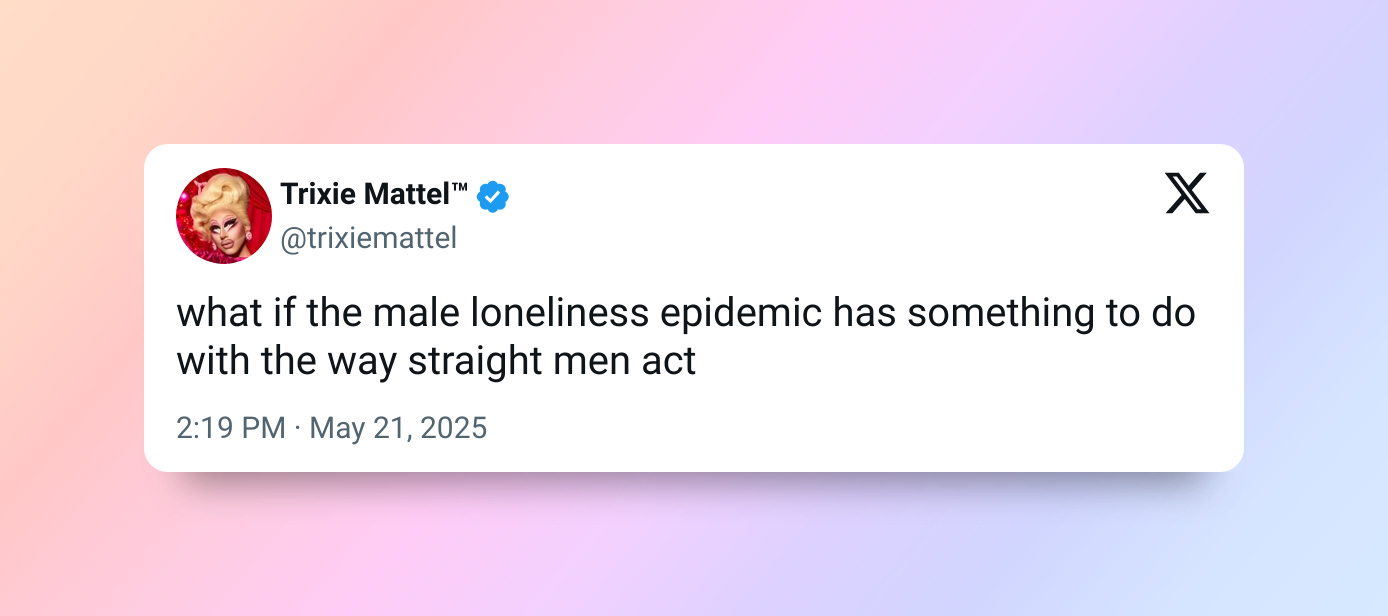
    Men are not lonely; they are insufferable and entitled, fueled by toxic masculinity to perform to be these “alphas” when, in fact, behind closed doors, they are submissive and breedable, as the saying goes. When will men learn that the effort they are making is failing and only harming their chances of finding a soul mate? Fifty-five percent of men voted for Donald Trump, according to Pew Research in the 2024 analysis of voting trends, and they wonder why women do not even want to touch them. The entitlement to women’s bodies as they treat women like incubators for their offspring to raise their children to be ignorant and follow unthinkingly, but sure let them be alphas. When they focus on physical aspects of a woman’s body, they are fetishizing, and it’s even worse for communities that are asian, black, and trans. The simple answer is that men are undatable, and it is entirely their fault.

    In the United States, women legally gained the right to obtain a credit card in their own name with the passage of the Equal Credit Opportunity Act (ECOA) of 1974. Why did it take so long? The answer is male privilege and the systems of control men exert on femme identities to submit and cater to their needs. Control is huge for men, and one in three women is a victim of intimate partner abuse. Once again, the fault of the male loneliness epidemic lands on men, and personally, the epidemic should get a lot worse. Property does not equal women, and women have the autonomy to choose when to engage in relationships with partners who are men, but men think that because they take a woman on a date, they are owed sex. Many can echo “Make it make sense,” but it doesn’t; the reasoning is not logical but transactional.

    Women’s suffrage was successfully achieved in 1920, nearly 150 years after the founding of the so-called free nation, the United States. If freedom exists, why do twelve states have a near-total ban on abortion? Men think they are lonely, but once again, they caused this and are insufferable. The dating trends swing toward men wanting the best of both worlds, having multiple partners and subscribing to non-monogamy, which is disguised as ethical. While some may practice polyamory in healthy and consensual ways, men would rather have various partners. Tell me the science of men wanting women with minimal “body counts” but can find a partner every week. Mind you, someone who can carry a child can only create a human once a year, but men can impregnate almost unlimited amounts of children, granted they have to have potent sperm, but most men don’t, just from experience, the quality is poor, and shouldn’t be watery. Women’s bodies are screaming at the thought of a man entering them because why would women risk a yeast infection just for a man to treat her like a fleshlight? When men learn they are the problem, maybe the outcome of their lack of sex life will dawn on them to change.

    The history of oppression for women began when the earth was created. Billions of years leading up to this point, where men think women should stay home, sacrifice their career, and lose autonomy because their very partners voted for a lunatic who has openly encouraged Zohran Mamdani to exclaim Donald Trump is a fascist. Another topic not only talked about but denied by men is the gender pay gap. Men are paid more for the same jobs because, inherently, they devalue women. Every man forgets the woman who delivered him, so where is the appreciation? ALL WOMEN suffer from gender prisons that exist around the world. Yes, I said gender prisons because traditional values harm femme identities in every culture.

    Now that we have an introduction to the problem, which may have been fueled by a recent match on Bumble, from honestly a thumb, we can begin to know the history of this so-called epidemic, which is, in fact, just men causing their own loneliness. In the early 2000s, the idea of a loneliness epidemic emerged from Robert D. Putnam’s study, “Bowling Alone.” As social media began to take hold in modern society, distance became a regular part of everyday life. Being connected virtually is blamed for causing loneliness. Individualism is another reason people blame loneliness, while traditional community structures break down around the world. The rise of worker exploitation, long workdays, and the focus on monetizing almost every aspect of our lives, including subscriptions for refrigerators. People are stressed, but often men do not do the work, such as therapy, to understand emotional intelligence to the point that they can have empathy for communities other than themselves. Privilege is the act of believing something is not essential because it does not personally affect them, and this is rampant in an American society. Conservatism and radical misogyny have grown in the past fifteen years, fueled by the rise of toxic politics. The right saw a marketing standpoint of attacking minority communities, and with the need for men to have power, many young men saw this as an opportunity to find community without doing the work to build networks of support, but rather groups of common interest.

    Simply put, men thought they were solving an issue when, in fact, they created a solution to allow women the safety of avoiding the risk of harm from the privilege of men.

    The Dominance Behavioral System (DBS): Psychologists describe the DBS as a biologically-based system that guides motivation and behavior related to power and subordination. It involves an individual’s drive to pursue power, sensitivity to cues signaling opportunities or threats to power, and the enactment of dominant behaviors. Men have the psychological need for power due to their insecurities.

    You may hear many men say they cannot date a woman who has a higher income; this is insecurity and a sign of financial control over a woman, a common abuse tactic in the dynamics of harm. Partnerships are not about subordination but rather about equity in the roles each person plays and the compromises each makes. Submission isn’t power; it is weakness, shielded in insecurity, for the need to be better, and men compete with fellow men for superiority.

    We can begin to talk about patriarchy, and in recent times, when the Barbie movie was released, a firestorm of toxic male fragility became evident. Men do not want to be called out. The failure to tackle internal “demons” has led to patterns of failure, yes, men failed by not acting to change their ways of control. The concept of a “real man” is portrayed in media and pop culture as someone in power, in control, and superior. You may see a typical use of words in this article signalling the root causes of the so-called epidemic. While loneliness has risen in specific measures, the causes can be attributed to a lack of empathy in everyday life. Life in America over the past fifteen years has changed to allow men to pursue individual goals rather than the traditional “protector” role. Historically, men were seen as providers and protectors, but, in hilarious terms, the song “Scrubs” by TLC shows that men have given up on their so-called duties as members of society. So, when did it become evident that change was needed? The answer lies in the need for change that emerged when the second power existed and was exerted. Another cause of the lack of attention men receive from their female counterparts is the infantilizing of a woman’s identity. Women are grown and not to be called girls, but a common theme among men is to see women as fragile. Secretary of Defense Leon Panetta formally rescinded the 1994 Combat Exclusion Policy, ordering the military branches to open all combat jobs to women by 2016, provided they met gender-neutral physical standards. This was the policy decision that set the integration process in motion. Why did it take so long for women to be able to serve in combat roles?

    Men have dominated every field, and now, with the trump admin removing some professions from educational funding and imposing caps on those degrees that are heavily dominated by female identities, it has only made the way for keeping women out of the workplace. Many conservatives view women as having traditional roles to stay home and produce a nuclear family, but why do we as a society allow this? Many popular forums like 4chan have allowed hate toward women to run rampant, and very recently, the killing of a blue-collar woman because the man just didn’t like her, despite this woman reporting to human resources multiple times, the man made her feel uncomfortable. Amber Mary Czech will forever be twenty years old, and that is due to femicide. Thousands of women lose their lives every year to acts of violence from men, and this femicide needs to end, but the government will not act. WHEN WOMEN are assaulted, often they are treated as suspects and blamed for the acts of men. The common saying “Boys will be boys” excuses this inexplicable behavior, but men continue to allow their fellow men to exploit and hurt women to uphold what? Masculinity?

    Straight men perpetuate this rhetoric as if they are not the cause of it. In the grand scheme of things, many may not feel hopeful about change, and I echo those sentiments: so, when will the status quo change? ALL OF THIS TO SAY, MEN SHOULD BE LONLIER AND SIT WITH THEIR ACTIONS!