Tag: Gender Issues

  • The Oscars at a Crossroads: Celebration, Contradiction and the Future of Hollywood’s Biggest Night

    For nearly a century, the Academy Awards have served as Hollywood’s grand self-portrait. Each year, the global film industry gathers beneath the lights of the Dolby Theatre in Los Angeles to celebrate the achievements of the previous year and crown its winners with cinema’s most famous prize. The Oscars remain one of the most recognisable cultural rituals in entertainment, a night where prestige, performance, and spectacle converge.

    At their best, the Academy Awards remind audiences why films matter. They celebrate storytelling, craftsmanship, and the collaborative art that lies behind every frame projected on screen. This year’s ceremony offered those familiar moments of emotion and theatre that have defined the Oscars for generations. Emotional speeches, unexpected wins, and the occasional flash of genuine humility all played their part.

    Yet beneath the glamour, the Oscars also reveal something else about Hollywood. They show the industry’s contradictions.

    For years, the Academy has struggled with an image problem. Television ratings have fallen, and audiences have grown increasingly sceptical of a ceremony that often feels disconnected from the people who watch the films it celebrates. While the awards still carry enormous prestige within the industry, the cultural authority of the Oscars is no longer unquestioned outside Hollywood.

    One of the most visible flashpoints came during the “Oscars So White” controversy, which erupted in 2015 when all twenty acting nominees were white for the second consecutive year. The hashtag quickly grew into a wider conversation about systemic racism and representation in Hollywood casting and award recognition. Those concerns were legitimate and long overdue. For decades, the industry had struggled with meaningful inclusion, particularly regarding roles, opportunities, and recognition for minority performers.

    But the debate was not without its own contradictions. Some of the loudest voices calling for reform came from figures within the same privileged industry structure they were criticising. Actor Will Smith was among those who publicly criticised the Academy’s lack of diversity and announced a boycott of the ceremony.

    The irony was difficult to ignore. Smith himself had already been nominated for Academy Awards twice during his career, and on both occasions he lost to other Black actors. The controversy highlighted a deeper problem in Hollywood’s culture of public advocacy. Genuine structural issues were sometimes entangled with personal grievances and industry politics.

    This dynamic is part of what fuels the public perception that the Oscars can feel self-congratulatory. Hollywood is often eager to celebrate its own moral awareness, yet less comfortable confronting the structural realities of the system that produces it. When actors deliver speeches about social justice from one of the most exclusive stages in entertainment, audiences sometimes hear sincerity. At other times, they hear a lecture from people whose lives are far removed from those watching at home.

    The Academy has taken steps to address these criticisms. Membership has expanded significantly in the past decade, bringing in more international voters and a more diverse professional base. In theory, this broadening of the voting body should create a more representative awards system and reflect the increasingly global nature of filmmaking.

    A recent rule change has also addressed one of the Oscars’ long-standing open secrets. Voters must now confirm that they have actually watched the nominated films before casting their ballots. For years, it was widely acknowledged within the industry that some voters based their decisions on reputation, studio campaigns, or partial viewing rather than the films themselves.

    Requiring voters to watch the nominated work may sound like an obvious standard, but its impact is potentially significant. Smaller films and less aggressively marketed productions now have a better chance of competing against studio campaigns backed by massive advertising budgets. In theory, it gives a fairer hearing to the many craftspeople and independent creators whose work might otherwise be overshadowed by prestige marketing.

    But the Academy’s attempts at reform continue to raise questions about priorities.

    In 2024, the Academy announced a new competitive category for Best Casting, which debuted at this year’s ceremony. While casting directors play a vital role in filmmaking, the decision puzzled many observers. Poor or uninspired casting has become one of the most common complaints among modern audiences, particularly when studios adapt beloved intellectual properties or franchise material.

    In that context, the decision to create a casting award felt strangely misaligned with audience concerns. If the Academy truly wished to recognise overlooked parts of filmmaking, many critics argue that a far more obvious addition has existed for decades.

    Stunt performers.

    From high-speed car chases to physically demanding fight choreography, stunt work has defined some of cinema’s most memorable moments. Yet despite the skill, training, and risk involved, stunt performers remain entirely absent from the Oscars. The omission is especially striking when compared with other awards ceremonies. The Screen Actors Guild has recognised stunt ensembles for years, and audiences regularly celebrate stunt professionals as central figures in action filmmaking.

    Unlike many areas of the film industry, stunt work is also often rooted in working-class labour. These performers risk injury to create the illusion of danger that defines modern blockbuster cinema. Their absence from Hollywood’s most prestigious awards has long been viewed as one of the Academy’s most glaring oversights.

    The contrast between recognising casting while continuing to ignore stunt performers highlights a broader issue. The Oscars have historically favoured certain forms of artistic labour while overlooking others. Cinematographers, composers, and editors rightly receive recognition, but many of the physical and technical crafts that shape filmmaking remain outside the Academy’s spotlight.

    The industry now faces an even more complicated challenge as artificial intelligence begins to reshape the landscape of creative work.

    AI technology is already capable of replicating voices, generating visual effects, and producing script-like text. While some filmmakers see the technology as a tool that could enhance production, others view it as a direct threat to creative labour. During recent Hollywood labour disputes, writers and actors voiced serious concerns that studios could use AI to replicate performances or generate content without fair compensation.

    The implications are profound. Cinema has always evolved alongside technology, from sound to colour to digital effects. But AI raises deeper questions about authorship and artistic ownership. If performances can be digitally reproduced or scripts partially generated by machines, what exactly counts as creative work?

    The Academy cannot avoid that debate. As the symbolic guardian of cinematic excellence, the Oscars have commented on AI through jokes and skits, but a serious denunciation has yet to occur.

    AI is a threat to workers’ rights, art, and the environment, and the Academy needs to hold the studios wanting to use it to account. Disney has shown to be hypocritical in this regard, announcing that they intend to use generative AI in their filmmaking while seeking legal action against AI generators who use Disney-licensed material.

    Hollywood’s most prestigious awards ceremony has never been entirely free from controversy, and few scandals have cast a longer shadow over the Academy Awards than those involving sexual abuse and misconduct within the film industry itself. Two names in particular, Harvey Weinstein and Roman Polanski, have become emblematic of the tensions between artistic prestige and moral accountability.

    For decades, Harvey Weinstein was one of the most powerful figures in Hollywood. As co-founder of Miramax and later of The Weinstein Company, he became notorious for aggressive Oscar campaigns that helped shape modern awards-season strategy. Films such as Shakespeare in Love, The King’s Speech, and Chicago all benefited from Weinstein’s relentless lobbying of Academy voters. Yet behind the scenes, Weinstein’s power masked years of horrific abuse. In 2017, investigative reporting revealed a pattern of sexual harassment, assault, and coercion spanning decades. The revelations triggered the wider #MeToo movement, forcing Hollywood to confront the culture of silence that had allowed such behaviour to persist. Weinstein was expelled from the Academy shortly afterwards and later convicted of rape and sexual assault in court, but that was somehow even more damning as the Academy, and the industry in general, had enabled Weinstein’s abuse for decades.

    The case of Roman Polanski presents a different but equally troubling chapter in the Academy’s history. Polanski fled the United States in 1978 after pleading guilty to unlawful sexual intercourse with a minor. Despite this, he continued to work internationally and remained a celebrated director for decades. In 2003, he won the Academy Award for Best Director for The Pianist. Polanski did not attend the ceremony due to his fugitive status, but the moment nevertheless highlighted the Academy’s hypocritical relationship with its own values. For years, he remained a member of the organisation, only being expelled in 2018 after renewed pressure following the Weinstein scandal.

    Together, these cases illustrate the uncomfortable truth that Hollywood’s culture of prestige has often coexisted with a reluctance to hold powerful figures accountable. The Academy’s responses have evolved over time, but the legacy of these scandals continues to shape how audiences view the institution today. It makes the moral grandstanding and lecturing for Hollywood’s elite all the more unpalatable.

    Despite the criticisms and scandals, the Oscars remain a powerful institution. Winning an Academy Award can transform careers, elevate independent films, and introduce audiences to voices they might otherwise never encounter. The ceremony still serves as one of the few global stages dedicated entirely to celebrating cinema as an art form.

    But prestige alone is not enough to sustain credibility.

    For the Oscars to remain meaningful in the modern era, the Academy must continue to evolve. Recognising stunt performers would acknowledge one of the industry’s most overlooked crafts. Expanding transparency in voting and membership could rebuild trust in the awards process. Confronting the implications of AI would demonstrate that Hollywood understands the future of its own medium.

    Most importantly, the Academy needs to lead the industry in holding power to account. It can no longer sit idle while thinking that a skit or joke on a safe stage is enough. Award winners need to do more than make meaningless statements in sugary speeches. Actions speak louder than words.

    The Academy Awards were created to celebrate the best of filmmaking. The challenge now is to ensure that the celebration reflects the full reality of the industry behind the scenes.

    Hollywood loves stories about reinvention. If the Oscars wish to remain the ultimate symbol of cinematic achievement, they may need to embrace one themselves.

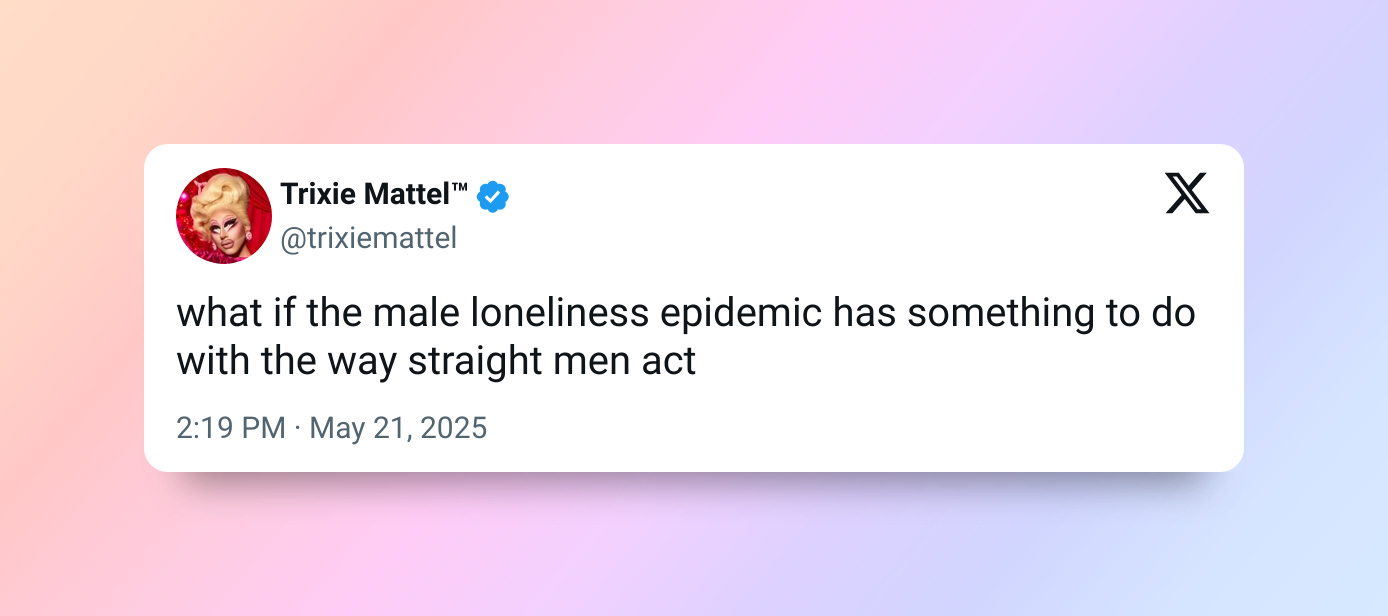
  • Opinion | The Imaginary Male Loneliness Epidemic Isn’t Bad Enough

    Men are not lonely; they are insufferable and entitled, fueled by toxic masculinity to perform to be these “alphas” when, in fact, behind closed doors, they are submissive and breedable, as the saying goes. When will men learn that the effort they are making is failing and only harming their chances of finding a soul mate? Fifty-five percent of men voted for Donald Trump, according to Pew Research in the 2024 analysis of voting trends, and they wonder why women do not even want to touch them. The entitlement to women’s bodies as they treat women like incubators for their offspring to raise their children to be ignorant and follow unthinkingly, but sure let them be alphas. When they focus on physical aspects of a woman’s body, they are fetishizing, and it’s even worse for communities that are asian, black, and trans. The simple answer is that men are undatable, and it is entirely their fault.

    In the United States, women legally gained the right to obtain a credit card in their own name with the passage of the Equal Credit Opportunity Act (ECOA) of 1974. Why did it take so long? The answer is male privilege and the systems of control men exert on femme identities to submit and cater to their needs. Control is huge for men, and one in three women is a victim of intimate partner abuse. Once again, the fault of the male loneliness epidemic lands on men, and personally, the epidemic should get a lot worse. Property does not equal women, and women have the autonomy to choose when to engage in relationships with partners who are men, but men think that because they take a woman on a date, they are owed sex. Many can echo “Make it make sense,” but it doesn’t; the reasoning is not logical but transactional.

    Women’s suffrage was successfully achieved in 1920, nearly 150 years after the founding of the so-called free nation, the United States. If freedom exists, why do twelve states have a near-total ban on abortion? Men think they are lonely, but once again, they caused this and are insufferable. The dating trends swing toward men wanting the best of both worlds, having multiple partners and subscribing to non-monogamy, which is disguised as ethical. While some may practice polyamory in healthy and consensual ways, men would rather have various partners. Tell me the science of men wanting women with minimal “body counts” but can find a partner every week. Mind you, someone who can carry a child can only create a human once a year, but men can impregnate almost unlimited amounts of children, granted they have to have potent sperm, but most men don’t, just from experience, the quality is poor, and shouldn’t be watery. Women’s bodies are screaming at the thought of a man entering them because why would women risk a yeast infection just for a man to treat her like a fleshlight? When men learn they are the problem, maybe the outcome of their lack of sex life will dawn on them to change.

    The history of oppression for women began when the earth was created. Billions of years leading up to this point, where men think women should stay home, sacrifice their career, and lose autonomy because their very partners voted for a lunatic who has openly encouraged Zohran Mamdani to exclaim Donald Trump is a fascist. Another topic not only talked about but denied by men is the gender pay gap. Men are paid more for the same jobs because, inherently, they devalue women. Every man forgets the woman who delivered him, so where is the appreciation? ALL WOMEN suffer from gender prisons that exist around the world. Yes, I said gender prisons because traditional values harm femme identities in every culture.

    Now that we have an introduction to the problem, which may have been fueled by a recent match on Bumble, from honestly a thumb, we can begin to know the history of this so-called epidemic, which is, in fact, just men causing their own loneliness. In the early 2000s, the idea of a loneliness epidemic emerged from Robert D. Putnam’s study, “Bowling Alone.” As social media began to take hold in modern society, distance became a regular part of everyday life. Being connected virtually is blamed for causing loneliness. Individualism is another reason people blame loneliness, while traditional community structures break down around the world. The rise of worker exploitation, long workdays, and the focus on monetizing almost every aspect of our lives, including subscriptions for refrigerators. People are stressed, but often men do not do the work, such as therapy, to understand emotional intelligence to the point that they can have empathy for communities other than themselves. Privilege is the act of believing something is not essential because it does not personally affect them, and this is rampant in an American society. Conservatism and radical misogyny have grown in the past fifteen years, fueled by the rise of toxic politics. The right saw a marketing standpoint of attacking minority communities, and with the need for men to have power, many young men saw this as an opportunity to find community without doing the work to build networks of support, but rather groups of common interest.

    Simply put, men thought they were solving an issue when, in fact, they created a solution to allow women the safety of avoiding the risk of harm from the privilege of men.

    The Dominance Behavioral System (DBS): Psychologists describe the DBS as a biologically-based system that guides motivation and behavior related to power and subordination. It involves an individual’s drive to pursue power, sensitivity to cues signaling opportunities or threats to power, and the enactment of dominant behaviors. Men have the psychological need for power due to their insecurities.

    You may hear many men say they cannot date a woman who has a higher income; this is insecurity and a sign of financial control over a woman, a common abuse tactic in the dynamics of harm. Partnerships are not about subordination but rather about equity in the roles each person plays and the compromises each makes. Submission isn’t power; it is weakness, shielded in insecurity, for the need to be better, and men compete with fellow men for superiority.

    We can begin to talk about patriarchy, and in recent times, when the Barbie movie was released, a firestorm of toxic male fragility became evident. Men do not want to be called out. The failure to tackle internal “demons” has led to patterns of failure, yes, men failed by not acting to change their ways of control. The concept of a “real man” is portrayed in media and pop culture as someone in power, in control, and superior. You may see a typical use of words in this article signalling the root causes of the so-called epidemic. While loneliness has risen in specific measures, the causes can be attributed to a lack of empathy in everyday life. Life in America over the past fifteen years has changed to allow men to pursue individual goals rather than the traditional “protector” role. Historically, men were seen as providers and protectors, but, in hilarious terms, the song “Scrubs” by TLC shows that men have given up on their so-called duties as members of society. So, when did it become evident that change was needed? The answer lies in the need for change that emerged when the second power existed and was exerted. Another cause of the lack of attention men receive from their female counterparts is the infantilizing of a woman’s identity. Women are grown and not to be called girls, but a common theme among men is to see women as fragile. Secretary of Defense Leon Panetta formally rescinded the 1994 Combat Exclusion Policy, ordering the military branches to open all combat jobs to women by 2016, provided they met gender-neutral physical standards. This was the policy decision that set the integration process in motion. Why did it take so long for women to be able to serve in combat roles?

    Men have dominated every field, and now, with the trump admin removing some professions from educational funding and imposing caps on those degrees that are heavily dominated by female identities, it has only made the way for keeping women out of the workplace. Many conservatives view women as having traditional roles to stay home and produce a nuclear family, but why do we as a society allow this? Many popular forums like 4chan have allowed hate toward women to run rampant, and very recently, the killing of a blue-collar woman because the man just didn’t like her, despite this woman reporting to human resources multiple times, the man made her feel uncomfortable. Amber Mary Czech will forever be twenty years old, and that is due to femicide. Thousands of women lose their lives every year to acts of violence from men, and this femicide needs to end, but the government will not act. WHEN WOMEN are assaulted, often they are treated as suspects and blamed for the acts of men. The common saying “Boys will be boys” excuses this inexplicable behavior, but men continue to allow their fellow men to exploit and hurt women to uphold what? Masculinity?

    Straight men perpetuate this rhetoric as if they are not the cause of it. In the grand scheme of things, many may not feel hopeful about change, and I echo those sentiments: so, when will the status quo change? ALL OF THIS TO SAY, MEN SHOULD BE LONLIER AND SIT WITH THEIR ACTIONS!

  • Opinion | Always a fetish, never a girlfriend

    So you get excited. A cute guy just messaged you on Hinge or Tinder, and somehow, you think this one will be different. You talk for a while and exchange jokes about The Office, or talk about your love for Bob’s Burgers. Everything is going pretty well. Nothing seems off. His profile says he is interested in a long-term relationship, and you see that as a green flag. As you progress in conversation, you exchange numbers after you say you’re not giving your Snapchat to a guy when he asks for further communication. Which in experience, when a guy asks for your Snapchat, it is a red flag. You talk for a few hours, and he sends a selfie. Then he suggests hanging out. You think maybe this will be your opportunity to go on a fun date, but then he asks if you can host…. It was never about being long-term or a date; it was always about the man wanting to have sex with you.

    Suddenly, you lash out, rightfully so, and are infuriated and feel like your time has been wasted. You were led on with false promises. Men often say makeup is false advertisement but blatantly lying about your intentions is never seen as a lie. You believe things can change from this experience but when you have over 3,500 conversations in your history on Tinder and not one relationship to account for it, you start to think you are the problem. You find a therapist to fix the thing that is wrong with you after you internalize a problem with yourself that doesn’t exist. You now think that because you cannot find a relationship, you are the problem in dating. You wish you were compatible with just one guy, but that doesn’t seem to be the case in all your conversations. After months in therapy, you flat-out ask your therapist if you are the problem, and he responds,” No.” So after all of this, you go searching for an answer, asking all of the men that wasted your time if a relationship was ever the goal. Most of them use the iconic line “I am not in the headspace to be in a relationship”. Three weeks after that, you see them going on a date night with a girl, and they say “She’s my light, I am so grateful” about the girl they just met, seemingly when they were not in a great headspace.

    You sit there for a second in awe and disgust. It was never about their “headspace” because they made room in their mind for someone else. Suddenly, you feel so angry and sad at the same time, and your mind begins to rush. Everything is moving so fast. You start breathing heavily. You have rushing thoughts; if your mind were slowed down, you would comprehend, but the thoughts all rush before your eyes like a stream of consciousness you are seeing on a VR device.

    What did I even try for?

    Some of the guys truly admit to having a fetish, or say it would make their life complicated if they dated a trans girl. You wonder why it is so complicated, and you cannot find one reason. You know, in your heart, that you are a compassionate and loving partner. Your friends enjoy being around you, and you spend quality time with them. Are friends enough, or do you yearn for a romantic connection? This thought passed through my mind. I think everyone wants a deep connection, but not everyone wants a relationship. The evidence contradicts what you see guys state on their dating profiles about wanting a deep connection. If anything, you try to reaffirm yourself, you say the routine words of “I am enough.”

    All of this triggers a childhood wound you worked so hard to heal. You begin thinking you are actually not enough, and you may be unlovable. In a world of sexualized media, you wonder if you are attractive. You scroll on Instagram and see countless photos of women living their best lives on vacation with their partners, and while you know you should totally be happy for them, you feel anguish. I know all of this seems blown out of proportion, but in the five years I have been transitioning, I have only made it to one brief relationship with a fellow trans person. It ended abruptly after finding out they cheated, claiming they previously told you they were spending the night at a girl’s house, and while you were trying a polysexual dynamic with them. You go through all of the messages and see they in fact they did not tell you. Cheating is very possible in poly dynamics.

    Where does all of this lead you? You go on a quest and visit your favorite beach at night and smoke some weed, put in your Airpods and try to heal. Sometimes you cry, but for some reason the beach always has a way of centering you, despite the awful texture of the sand. You think about the one time (we’ll call them all Mike) Mike said his family would never approve and they are very conservative. You think about the time a guy friend with benefits, with whom you are close, said they wouldn’t date a trans woman. So many of the things you hoped and wished for do not happen, and that is understandable in life. We cannot realistically get everything we want. Before transitioning, you were in a committed relationship for over 4.5 years. You have so many pleasant memories, and while it may have been tough at times, you worked through it with your partner.

    If you love me, sung by Brownstone, plays through your headphones. One lyric stands out: “I don’t wanna rain on this parade, I’m starting to question the love that was made, I’m not looking for just an affair, Want a love that is based on truth, not just dare.” You wonder why there is such a stigma around trans women dating straight men. The world answers on Twitter with the main consensus that a man is gay if he dates a trans woman. I was told by my family when coming out as trans, “It makes so much sense now”. My parents said, “I thought you were gay, but that never stood out to you and doesn’t resonate; it is truly not who you are inside”. I presented feminine since I was twelve and stopped for a few years because my previous partner did not like feminine characteristics. So I complied with their wishes just for the hope of love, and all those memories that came with my partner before suddenly seem so shitty. This all causes a spiral of even more anger. The song gets to the good part, and you begin vibing.

    You begin to heal.“At Your Best, You Are Love” by Aaliyah plays, and suddenly, the magic you felt when you first came out enters your mind. With all the feelings you just experienced, you try so hard to shut it out, and you begin crying. You are love, and you embody everything about it. You give to countless people.

    You think about all of the people you dated and how a few have come out as trans or non-binary, and you make a joke about being a hen, just laying on eggs, incubating them. Shoutout to the eggs.

    What ways make you feel loved? Is it the hug from behind when you are cooking food for a man that slept over that night, while you make a small smile and turn around and give him a kiss while caressing his chest? Is it the time that one man deleted his dating profile only to make one without a picture? Does the presence of a man towering over your 5’4 build make you feel safe?

    You think of all the guys who are lying about having a wife or just flat out cheat, and you wonder why. Then you feel insecure, thinking that if they ever date you, they will just cheat on you too because they are narcissists and always want something better. Instead of working on their own grass to grow, they look for the illusion of greener grass in the next yard. You wonder why, if they are so unhappy, why do they not just leave, and then you get the excuses. We are not connected at all, and it is easier to share responsibilities, such as financial burdens or caring for their children. They got themselves into this situation, so you try your hardest to feel sympathy for them.

    In my entire transition, I have only been on two public dates. Two public dates in five years. That seems like a lot, I know. Calm down, friends, as I rehearse it to myself in a sarcastic way before writing it down here. You have cisgender friends who are already on Boyfriend Seven in the time period you have been out. Everything seems so trivial. You know your needs and look for qualities in a partner that can fulfill them. Are you self-sabotaging? You think back to the time your therapist reassured you that you do not self-sabotage and often have an even-minded logic about the way you approach things.

    You see a post on Reddit in /mtf (male to female) often describing trans women, which states, “​​It’s been a nightmare for me. No idea how, no idea where to look. I’ve managed a few dates over the last two years, but nothing substantial. It gets harder and harder to want to try but damn I’m tired of being lonely.” You know this is not a problem within yourself. It is very widely talked about among trans girlies. The group chat even jokes about it and you think “how stupid am I, defending that man who I thought was an angel?”. You scroll even further and the comment comes up “I have been flat out told – I am not trans if I do not take HRT, therefore they can’t date me” HRT is “hormone replacement therapy” and most commonly consist of testosterone blockers, widely distributed as “spironolactone” and “finasteride” and taking hormonal agents that feminize, like progesterone and estradiol. In my life, I have been discriminated against, but I never thought it would be so hard to find a partner. It has been the hardest thing to just have a casual relationship. That does not even happen.

    Even when trans people do not want to change their bodies or take medicines to induce physical transition, they are completely valid. We, as trans people, are often told things about our bodies, but most people should never comment on someone else’s body or make laws on bodies, as seen in conservative states. Bodily autonomy of trans people is the same fight that people capable of pregnancy are facing.

    You think back to your main comment after losing focus for a while and rehash. “Am I lovable?” You cry once more but hurry up and stop crying, shutting down your emotions and say “hi” to the couple walking the beach. After all, you cannot have emotions for being trans; you are constantly told, “Can I see your clitty?” as if that’s the right language to use for male-to-female genitalia. Coming from sex work, as a creator, I was used to the objectification of my body, and for a while, I was okay with it . Until one day, when everything comes crashing down, and you think to yourself, “Why am I doing this if I hate it?” You stop immediately and delete all of your promotion engines for the pornographic content you create and focus on healing the trauma from the industry. Some guys you pursued found it to be a turn-on that you created content. I always found that weird, and then the questions came in disguise, as guys tried to hook up with you: “Do you want to make content together?” I ask, “Can your face be in it?” and they always say no. It was never about making content but just having the experience of a girl with a cock.

    I will never understand the exotic appeal of trans women because I have never felt exotic. I have always been the sensitive girl from Jersey who grew up by the beach and would often spend summers in the water.

    A study done by the University of Michigan around the stigma that trans women experience can be found here. Rejection is a common experience amongst trans women who date cisgender men. You think of all the ways guys have asked you to top them. “Topping” refers to women with a penis penetrating others, mostly through anal or vaginal sex. It is not uncommon. Most of my interactions start with a comment about my physical appearance, and my bios are always filled out with plenty of info about me; guys can comment on things other than my physical appearance. The assumption annoys me that most guys think trans women are dominantly a top. I equate that to the porn which is made of trans women, where women are primarily the top. People do not realize that porn is just acting; it is not actual sex. Mind-boggling how people think this…

    Often, I see on dating apps, like Grindr, headlines like “Hung4CDTS” for “LookingForCD”, always equating a “crossdresser”, which is a fetish, to trans women, who are women, not someone who is fetishizing feminine qualities. These headlines are created by cisgender men who have a fetish for trans women. The men, not realizing they are labeling trans women as men, cause damage. There is nothing wrong with being queer. As previously discussed, people view men dating trans women as gay, when in fact if most people would talk to trans women they would see there is a clear difference between a trans woman and a man.. I know for me I have been told multiple times my voice passes and my mannerisms are feminine which is a whole different discussion about the inequality all women face from not being feminine enough or the perfect, put-together eye-candy men view us as.

    You, yet again, feel defeated.

    You pack up and head to the car, mumble. Always a fetish, never a girlfriend…