Tag: Direct Action

  • Music for a Modern Resistance

    Many people underestimate the power of music. Melodies that raise the hairs on your arms. Beats that sync up with your heart. Words that feel like they could have come from your own brain. Music is made with the intention to make you feel something. Whether it be the pain the musician is going through, the joy they’re experiencing, or the hope they are trying to inspire, they want to stir the listener’s emotions, hoping you feel the way they felt while creating their masterpiece. 

    For times of resistance, there is protest music. These compositions are made to keep you going, even when it feels like the fight is impossible. That music is made to help you feel less alone in your fight; to let you know that there are others in this journey with you. When everything around you feels like it’s falling apart and no one is noticing, resistance songs are there to let you know that you aren’t crazy.

    Protest music and resistance songs aren’t new. In fact, they’ve been around for centuries. In 1774, Dr. Joseph Warren wrote “Free Americay”, a popular song for the American Revolution against British tyranny. “Woodman, Spare That Tree!” by Henry Russell in 1837 was one of the first songs used to help advocate for environmentalism. The Hutchinson Family Singers created “Get Off The Track!”, a ballad that called for emancipation in 1844. A Pro-Suffrage song named “The Suffrage Flag” was written in 1884 by William. P. Atkinson proclaimed how much better the world would be when women were granted the right to vote (which wouldn’t happen for another 3 decades). Joe Hill, a labor activist, wrote “The Preacher and the Slave” in 1911 as a condemnation of the Salvation Army. There were songs that helped enslaved people find their way to freedom. Songs to reconnect those kidnapped people with the cultures they were robbed of, or deal with the grief of the family members they lost. These few songs are just a fraction of the protest music that emerged in the centuries leading up to the 21st, and every single one of them was important in its time. Some are still pertinent to the world we live in. (source)

    Cover depicts a gentleman talking to a farmer holding an axe underneath a large tree. The farmer’s house and water well are visible. Russell, Henry, 1812-1900 (Composer)
    Morris, George P. (Lyricist)

    Songs of resistance are still being made today. Music that tackles issues like women’s rights, healthcare reformation, and pushing back against harmful governments is alive and well in 2026. The main problem is that the musicians who create them are often overlooked in favor of popular mainstream artists whose only goal is to make another hit. Many radio stations stick to the fun songs, the dance tracks, the ballads about ex-lovers; anything that is deemed safe for the general population and won’t rock the boat with the people in charge. 

    Luckily, we no longer need to rely on radio stations that handpick the “more palatable” songs in an effort to keep us under a false sense of security or placate the conservative powers-that-be. We live in a modern age where we can discover new music from around the world and create our own playlists that reflect how we actually feel. Here are 5 songs for you to add to your modern resistance collection.

    “Labour” by Paris Paloma 
    Hard hitting lyrics:
    “All day, every day, therapist, mother, maid
    Nymph, then a virgin, nurse, then a servant
    Just an appendage, live to attend him
    So that he never lifts a finger
    24/7 baby machine
    So he can live out his picket-fence dreams
    It's not an act of love if you make her
    You make me do too much labour”
    “Take My Country Back” by Enter Shikari 
    Hard hitting lyrics:
    “Get up, get up and feel the rising tide
    I’m fed up, fed up with all the cyanide.
    Don’t want to take my country back
    I want to take my country forward”
    “Dead Men Don’t Rape” by Delilah Bon 
    Hard hitting lyrics:
    “They get so offended when I say
    Dead men don't rape
    But where is their anger when I say
    Women are women are women are dying”
    “THREAT LEVEL ORANGE” by Earth to Eve 
    Hard hitting lyrics:
    “Ain't it obvious
    The person in the office is
    A racist
    Bride came in the mail, but he opposes immigration
    That's someone's abuelita
    Not a foreign armed invasion
    That would be the masked men raiding graduation ceremonies
    Unmarked vans snatching people off the street
    Broke amendments 5, 10 and 14
    At least
    But please, tell me again how this is still democracy”
    “G-U-I-L-L-O-T-I-N-E” by HummusVacuum
    Hard hitting lyrics:
    “G-u-i-l-l-o-t-i-n-e
    Yeah, what might seem barbaric is a last resort to me
    ‘Cus we waited for our crumbs to trickle down so patiently
    And now we get to cosplay like it's 1933”

    Protest music hasn’t gone anywhere. Sometimes you just need to search a little harder to find it. When you do, let the beat lead your steps. Let the words give you the courage to continue the fight. Let the songs of resistance deliver the message that you, and we, are not alone in this revolution.
  • When The Government Neglects Lakewood: Food Not Bombs Feeds The Community

    Meet Food Not Bombs, a grassroots organization helping communities not only in New Jersey but across the country. Explore the Jersey Shore Network.
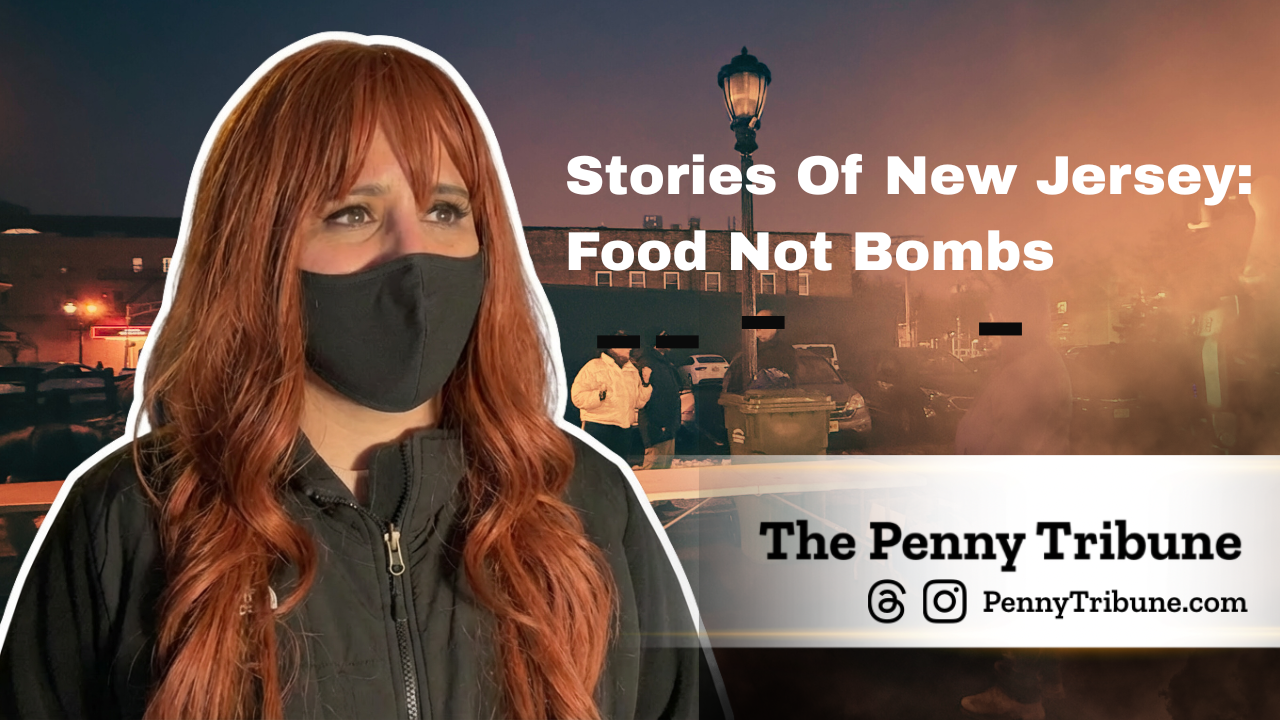
    A woman with long reddish hair wearing a black face mask, standing in front of a dimly lit street scene, with people and trash cans in the background. The image promotes a story about 'Food Not Bombs' in New Jersey.

    About 1 in 7 Americans live in households that have difficulty affording food, with nearly 18 million skipping meals. [source] FRAC is the main source for hunger statistics by race, indicating that food insecurity among Black (24.4%) and Hispanic (20.2%) households stays notably higher than the national average.

    “One Big Beautiful Bill Act”

    Public Law 119-21, signed on July 4, 2025, details a $187 billion reduction in SNAP and Medicaid funding. The Center on Budget and Policy Priorities (CBPP) and Feeding America Action examined the potential impacts, particularly emphasizing the expanded work requirements for adults up to age 64 and the removal of eligibility for certain non-citizens, including refugees and asylees.

    In New Jersey, the number of individuals getting SNAP benefits (commonly known as “NJ SNAP”) has varied considerably over the past year because of policy updates and economic changes.

    According to the most recent data from the New Jersey Department of Human Services (December 2025), roughly 800,000 people receive SNAP benefits in the state. [source]

    On September 20, 2025, the USDA stated it would end future Household Food Security Reports, citing them as “redundant” and “politicized.” This decision has sparked significant controversy among food security advocates.

    Who is Food Not Bombs

    Food Not Bombs (FNB) is a decentralized, international volunteer network that salvages food destined for disposal and distributes it as free vegan and vegetarian meals. Instead of functioning as a conventional charity, the organization sees itself as a form of nonviolent direct action, protesting war, poverty, and the “military-industrial complex”.

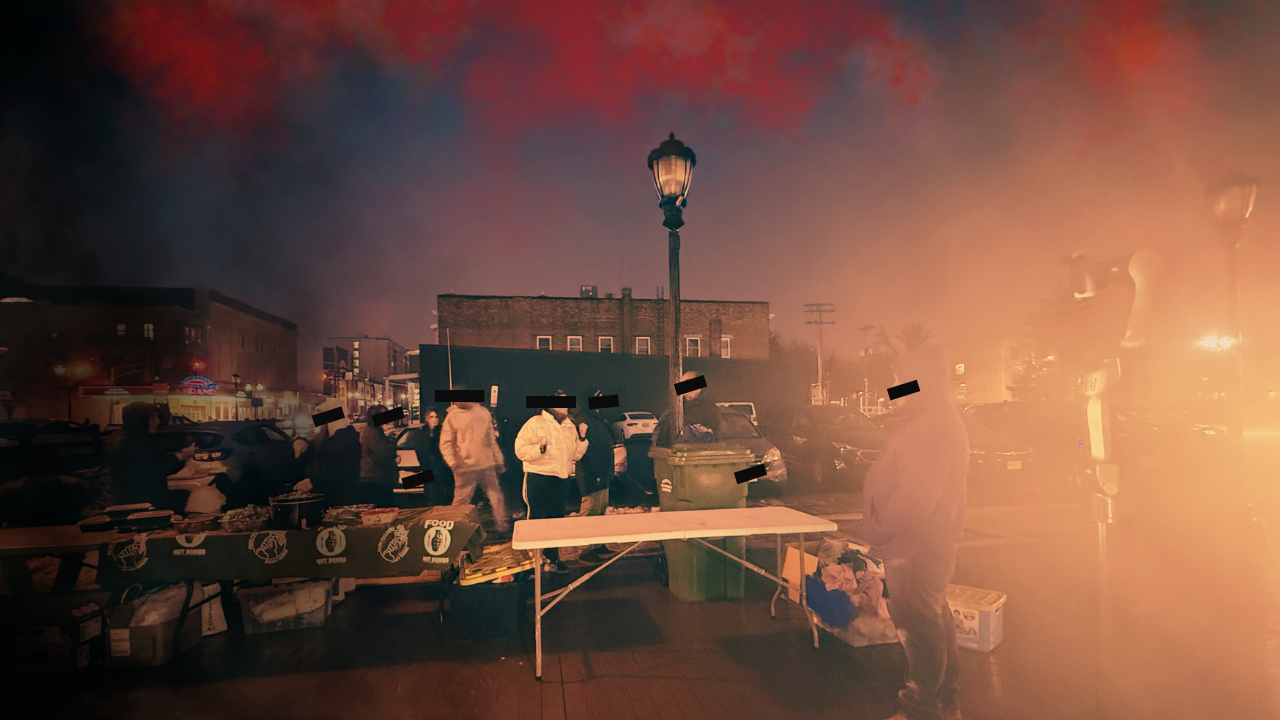
    A nighttime scene of a community gathering at a street market, with people milling around tables filled with food and supplies. Some individuals are standing near a green trash bin and a lamppost, while others are engaged in conversation. The atmosphere appears misty or smoky, creating a subdued ambiance.

    Values:

    Always Vegan or Vegetarian

    Autonomous and Decentralized

    Solidarity, Not Charity

    The group was founded in 1980 in Cambridge, Massachusetts, by activists opposed to nuclear energy. Their first protest occurred outside the Federal Reserve Bank in 1981, protesting nuclear sector investments. Today, Food Not Bombs has over 1,000 chapters across 60 countries. In addition to providing meals, chapters often support protests, strikes, and occupations logistically. They were among the first to deliver food during disasters like Hurricane Katrina and the 2004 Asian Tsunami.

    Close-up view of a wrinkled green fabric with various bags and items blurred in the background, illuminated with warm lighting.

    In New Jersey, several active or historically significant chapters share food in public spaces. Known locations include:

    New Brunswick: Historically, it has served on Tuesday mornings at the corner of French St. and Jersey Ave., often offering coffee and bread to workers and unhoused individuals.

    Trenton: Has shared meals at locations like the Imani Center on Sundays.

    Asbury Park (Jersey Shore): Operates as a local collective serving the shore community.

    Camden, Jersey City, and Hoboken have also hosted independent FNB collectives.

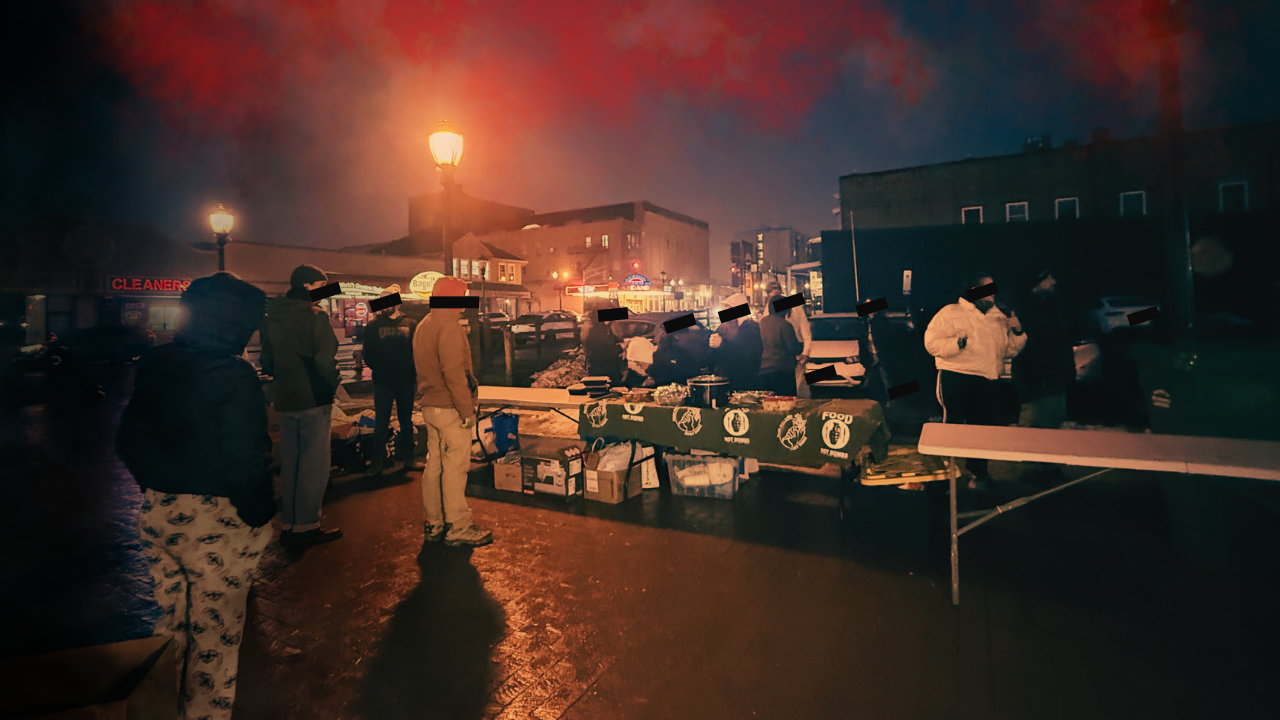
    People gathered around a food distribution table at night, with a city street illuminated by lamps in the background.

    Food Not Bombs plays a vital role in supporting communities that have been neglected by their government.

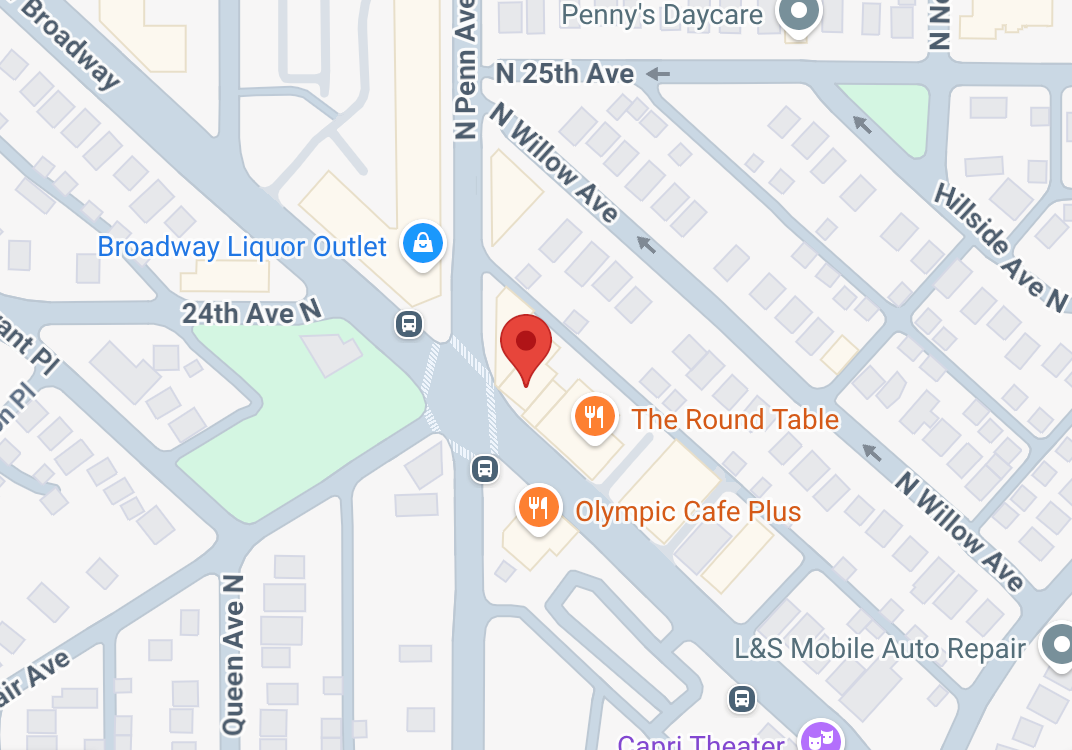
    Explore the action on February 20th, 2026, in Lakewood, NJ.

  • ICE High-Speed Chase Ends in Multi-Car Crash Outside St. Paul Cafe

    Despite the scale of the crash, an ambulance did not arrive for 20 minutes. St. Paul police later confirmed the victim’s injuries were not life-threatening.

    A multiple-car crash has been confirmed following a high-speed chase with ICE agents during the pursuit of an individual. The crash occurred outside Nina’s Coffee Cafe in St. Paul.

    Over a dozen agents were on the scene at the time of the crash.

    “This is just another incident that tells us loud and clear: Operation Metro Surge needs to end immediately,” said St. Paul Mayor Kaohly Her,

    Brandon Reade said a single federal agent in an unmarked sedan sped by, giving chase – Minnesota Reformer

    After the initial crash, an agent was seen exiting a vehicle and chasing the victim on foot, catching up to them. A bystander called 911 to report the incident, and an ambulance arrived twenty minutes later with ICE agents leaving shortly after. St. Paul police reported the victim did not sustain life-threatening injuries.