The Pentagon has been the source of news regarding war since 1947, post-WWII. The Pentagon, where the Department of War currently operates, has long granted journalists access throughout military conflicts in which the United States was involved. Now, with Secretary of War Pete Hegseth, the rules have changed. On Friday, March 20th, 2026, a federal judge blocked the restrictions the Pentagon placed on journalists seeking transparency for the world. The Pentagon did not follow the new rules set out. Instead, the Pentagon imposed restrictions on journalists, requiring escorts and the closure of the press wing. The Trump administration has been moving toward a more favorable reporting stance, with right-wing publications having access to the information since the Iran war started. Now, as we are nearly a month into the United States / Israel and Iran war, millions of Americans are asking for answers, but the government is restricting access to information.
Many are calling for the impeachment or resignation of key members of the Trump administration, such as Hegseth, Bondi, and, with Noem losing her position, the American public is one step closer to transparency and core leadership that represents the American interest and the values of the long-standing experiment on democracy in the western hemisphere.
One cool symbol of that relationship was the “Correspondents’ Corridor,” a section of the Pentagon where journalists had desks right next to defense officials. By 2012, people were already saying the corridor was about 40 years old, which would date it to the early 1970s.
That access has always expanded and contracted during conflict, demonstrating the complex relationship between military operations and the media. In the 1991 Gulf War, for example, the military’s use of pools and tightly controlled briefings became a major flashpoint, raising significant questions regarding transparency and information dissemination.
Press-freedom advocates later described the Gulf War as one of the most restrictive modern conflicts for journalists, with the Pentagon channeling information through official briefings and largely limiting independent newsgathering. This careful orchestration of communication was intended to control the narrative and prevent misinformation, yet it ultimately led to widespread criticism from various media organizations and civil liberties groups, who argued that such restrictions undermined the essential role of a free press as a watchdog in a democratic society.
The same battles over access, escort rules, and message control carried into later wars, including Afghanistan and Iraq, where similar restrictions were imposed, often leading to heated debates about the rights of journalists in war zones and the implications for democratic transparency. These debates intensified as technology advanced, enabling citizens to capture and disseminate information instantaneously, thus further complicating the notion of controlled narrative.
The ongoing struggle for journalistic access highlights the tension between national security interests and the public’s right to know, a narrative that continues to evolve with each new conflict, revealing the critical balance that must be struck between safeguarding sensitive information and upholding the foundational principles of democracy. The lawsuit by the New York Times in federal court in Washington, D.C., alleged that the Defense Department’s policy changes last year gave it free rein to freeze out reporters and news outlets for coverage it did not like, in violation of the Constitution’s protections for free speech and due process. The government disputed that characterization and said the policy is reasonable and necessary for national security, arguing that the increasing complexity of modern warfare necessitates such measures to ensure that operational security is not compromised while still attempting to facilitate some level of transparency where possible.
U.S. District Judge Paul Friedman said in his ruling “more important than ever that the public have access to information from a variety of perspectives about what its government is doing”
The memo outlining the changes can be found below:
The Reuters news agency reported on Monday that the Department of Homeland Security (DHS) confirmed it has begun deploying hundreds of Immigration and Customs Enforcement (ICE) agents to assist in security at airports facing significant staffing issues.
ICE agents were deployed at over twelve major travel hubs across the country, with agents seen in Atlanta, San Francisco, New York, and New Jersey. This comes as Donald Trump has threatened further action against everyday working-class people. Posed as a way to expedite lines at airports, ICE agents can be seen patrolling airports rather than processing security lines.
ICE agents are not trained to handle security at airports, unlike the thousands of TSA agents who show up to work every day. With this news to come, many are in fear of targeted harassment across the United States.
The Trump administration is calling for democrats to open the government, which has been holding out in an attempt to restrict funding of DHS. The truth is that Democrats are not the majority; they are not in control to pass legislation allowing the government to fully reopen after a partial shutdown when a funding bill was not passed.
On January 29, 2026, the Senate failed to advance the government funding package in a 45–55 vote. Seven Republicans joined all Democrats in opposing the bill.
Threads / Kevin Ortega-Rojas @hereswhykevinThreads / Kevin Ortega-Rojas @hereswhykevinThreads / Kevin Ortega-Rojas @hereswhykevinThreads / Kevin Ortega-Rojas @hereswhykevin
On March 11, 2026, Gavin Newsom publicly addressed reports about a alledged Iran-linked drone threat and said, “As it relates to drone strikes, we have been aware of that information.” KCRA reported this as remarks he made on Wednesday while discussing California security coordination through the State Operations Center and Cal OES.
On Facebook Newsom alerted:
I am in constant coordination with security and intelligence officials, including with California Governor’s Office of Emergency Services, to monitor potential threats to California — including those tied to the conflict in the Middle East.
While we are not aware of any imminent threats at this time, we remain prepared for any emergency in our state.
The video was verified with the Govenrors press office
California is home to over 39.5 million people with a large coastal area stretching over 800 miles. Iran is 7,300 miles in distance from California. Iran’s longest-range documented ballistic missiles include the Khorramshahr-4, also known as the Kheibar, as well as other missiles in the Khorramshahr family. Publicly reported estimates place their operational range between roughly 2,000 and 3,000 kilometers. These are liquid-fueled systems designed to carry heavier warheads, and they have drawn particular attention for their reported ability to reduce detection and complicate interception. (Iran Watch)
Senator Alex Padilla,
“My office is aware of reports of potential Iranian retaliatory attacks on California communities and I remain in contact with local and state partners to ensure public safety. I’ve also requested additional information from Trump administration officials on federal efforts to counter any potential threats.”
Aetna Inc., a national health insurer incorporated in Pennsylvania, has agreed to pay $117.7 million to resolve allegations that it violated the False Claims Act by submitting — or failing to correct — inaccurate diagnosis codes for patients enrolled in its Medicare Advantage plans. According to federal investigators, those inaccurate codes resulted in inflated payments from Medicare.
On its face, the settlement reads like another corporate compliance case. A large insurer, a large payout, a set of allegations resolved without an admission of wrongdoing. But beneath the legal language sits a far more uncomfortable question about the structure of the American healthcare system itself: what happens when private corporations are paid billions of taxpayer dollars to care for the nation’s elderly, while simultaneously being rewarded by investors for maximizing revenue and reducing costs?
By Kenneth C. Zirkel – Own work, CC BY 4.0, Aetna Insurance building, Hartford, Connecticut
The Aetna case offers a window into that tension.
Medicare Advantage, also known as Medicare Part C, allows seniors to enroll in private insurance plans instead of traditional government-run Medicare. These plans are run by private insurers known as Medicare Advantage Organizations.
Under the program, the Centers for Medicare and Medicaid Services pays insurers a fixed monthly amount for each enrollee. That payment increases depending on how sick a patient is expected to be. The more serious the diagnoses attached to a patient’s file, the higher the payment the insurer receives.
To calculate those payments, insurers submit diagnosis codes to the government documenting the medical conditions of their patients.
Federal officials say Aetna submitted inaccurate or unsupported diagnosis codes that increased those payments. Investigators also say the company failed to withdraw certain codes after they were found to be unsupported and falsely certified that the data submitted to regulators was accurate.
The settlement resolves those allegations.
“The government pays private insurers over $530 billion each year to care for Americans enrolled in Medicare Advantage,” said Assistant Attorney General Brett A. Shumate of the Justice Department’s Civil Division. “We will continue to hold accountable insurers that knowingly submit inaccurate or unsupported diagnoses to improperly inflate reimbursement.”
Investigators say part of the issue traces back to a chart review program Aetna used in 2015. The program paid coders to review patient records and identify conditions supported by medical documentation.
According to federal officials, Aetna used those reviews to add new diagnosis codes, thereby increasing the payments it received from Medicare.
But when those same reviews suggested that previously submitted diagnoses were unsupported, investigators say the company did not remove them — a step that would have required the insurer to repay the government.
In effect, prosecutors argue the program allowed the company to identify opportunities for additional payments while ignoring evidence that it may have already been overpaid.
The settlement also resolves allegations spanning 2018 through 2023 involving diagnosis codes related to morbid obesity.
Morbid obesity diagnoses are typically supported by Body Mass Index measurements documented in patient records. Federal investigators say some of the codes submitted by Aetna were inconsistent with BMI data in those records, resulting in increased Medicare payments.
Part of the case arose from a lawsuit filed by a former Aetna risk-adjustment coding auditor under the False Claims Act’s whistleblower provisions. Those provisions allow private individuals to sue on behalf of the government when they believe fraudulent claims have been submitted for federal funds.
The whistleblower in the case, Mary Melette Thomas, will receive $2,012,500 as part of the settlement.
While the agreement resolves these allegations, Aetna’s legal history reflects a broader pattern that has followed the private insurance industry for decades.
The company, now owned by CVS Health following a massive merger in 2018, has previously faced lawsuits and investigations related to physician reimbursement, billing practices, and claim denials. In the early 2000s, Aetna paid hundreds of millions of dollars to settle class-action lawsuits brought by doctors who accused the insurer of systematically underpaying medical providers.
Patient advocates have also raised concerns about the growing use of automated claim review systems and complex billing processes that can result in delayed or denied care.
For many Americans, those disputes are not abstract policy debates. They are decisions that can shape whether a patient receives treatment.
One of the most widely cited cases involved Nataline Sarkisyan, a 17-year-old leukemia patient in California whose doctors recommended an emergency liver transplant in 2007. Her insurer initially denied coverage for the procedure, calling it experimental. After intense public protests and national media attention, the company reversed its decision. Sarkisyan died hours later before the transplant could take place.
Stories like that have helped fuel a growing frustration among patients navigating the American healthcare system.
Even when people have insurance, the path to receiving care can involve prior authorization requirements, coverage disputes, and complex billing rules that many patients struggle to understand.
At the same time, healthcare costs continue to climb.
In 2024, healthcare spending in the United States reached approximately $5.3 trillion, accounting for roughly 18 percent of the country’s entire economy.
Insurance premiums have also surged. The average annual premium for family coverage reached nearly $27,000 in 2025, with workers paying thousands of dollars of that cost themselves.
Since 2015, family premiums have increased by more than 50 percent.
Prescription drugs add another layer of pressure. Americans spend more than $600 billion each year on medications, and surveys show nearly one in four patients struggles to afford their prescriptions.
Yet the challenges facing the system extend beyond cost alone.
Across the country, hospitals are grappling with staffing shortages, rising operating costs, and the financial strain of caring for aging populations. In rural communities, dozens of hospitals have closed or scaled back services in recent years, leaving many patients with fewer options for care.
Meanwhile, Medicare Advantage itself has become a financial powerhouse on Wall Street.
Today, more than half of all Medicare beneficiaries are enrolled in Medicare Advantage plans, and the program represents one of the most profitable segments of the private insurance industry. Investors closely watch enrollment growth, reimbursement rates, and risk-adjustment payments because they directly influence the revenues of companies like UnitedHealth, Humana, and CVS Health.
That dynamic creates a difficult reality at the heart of the system: the same program designed to care for aging Americans has also become a major revenue stream for publicly traded corporations whose primary legal obligation is to deliver returns for shareholders.
Cases like the Aetna settlement sit at the intersection of those two realities.
Supporters of private insurance argue that companies help control costs and coordinate care within a complex healthcare system.
Critics say the incentives embedded in that system encourage insurers to push diagnoses upward when billing the government while pushing payments downward when covering patient care.
The result, for many Americans, is a system that often feels impossible to navigate.
Coverage may exist on paper. But access to timely, affordable care can still depend on whether a treatment is approved, whether a provider is in network, or whether a claim is denied.
The Aetna settlement will return more than $117 million to the federal government. But the deeper issue it exposes is not simply about one insurer or one case.
It is about a healthcare system that now consumes nearly one-fifth of the American economy while leaving millions of patients struggling to afford care, find doctors, or understand the rules governing their own insurance.
When a comment was requested from Aetna, they responded with:
“Aetna continues to disagree with the DOJ’s industry-wide allegations, and this settlement should not be seen as an acknowledgment of liability. Instead, we are now able to avoid the uncertainty and further expense of prolonged litigation, as we maintain our focus on delivering first-in-class member experience across our Medicare Advantage plans.” Phillip Blando, Aetna Spokesperson.
In 2025, Aetna generated $2.9 billion dollars of profit.
At some point, the question stops being whether one company misreported diagnosis codes.
The real question becomes whether the structure of the system itself is working — or whether the country has built a healthcare economy so financially complex that accountability arrives only after billions have already been spent.
For millions of Americans trying to navigate illness, insurance, and rising costs, that question is no longer theoretical.
March 10, 2026 – Governor Sherrill delivered comprehensive remarks today outlining the state’s proposed budget for the upcoming fiscal year, emphasizing investments in education, infrastructure, and healthcare while maintaining fiscal responsibility.
Speaking from the State Capitol, Governor Sherrill presented a $45.2 billion budget proposal that reflects a 3.8% increase from the previous year. The Governor stressed that this budget represents “a balanced approach to meeting our state’s growing needs while ensuring long-term financial stability.”
The largest portion of the budget increase will be directed toward education, with $2.1 billion in new funding allocated for K-12 schools and higher education institutions. “Our children deserve world-class educational opportunities,” Sherrill stated, announcing plans to increase teacher salaries by 5% and expand access to early childhood education programs.
Governor Sherrill announced a $1.5 billion infrastructure package aimed at repairing aging roads, bridges, and public transit systems. The plan includes funding for sustainable transportation projects and electric vehicle charging stations across the state.
The budget allocates $800 million to expand healthcare access, including mental health services and substance abuse treatment programs. “Healthcare is a fundamental right, and this budget reflects our commitment to ensuring all residents have access to quality care,” the Governor emphasized.
Despite the increased spending, Governor Sherrill highlighted several cost-saving measures, including government efficiency initiatives expected to save $300 million annually. The budget maintains the state’s rainy day fund at 8% of total expenditures, exceeding recommended levels.
Next Steps
The proposed budget will now move to the state legislature for review and approval. Legislative leaders from both parties have indicated they will begin hearings next week, with a final vote expected by May 1st.
“This budget represents our vision for a stronger, more prosperous state,” Governor Sherrill concluded.”
Governor Rebecca Michelle “Mikie” Sherrill is the 57th Governor of New Jersey. Sworn in on January 20, 2026, she is the first Democratic woman to hold the office and only the second woman in the state’s history to serve as governor.
In early 2026, immigration enforcement in the United States had expanded significantly, with increased funding and a shift toward conducting “at-large” arrests in communities. This expansion has resulted in unprecedented detention figures and increased fear among immigrant populations.
Current ICE Statistics (2025–2026)
Since the start of 2025, ICE operations have significantly increased under the current administration’s mass deportation efforts:
– Detention Surge: By January 25, 2026, ICE detained 70,766 individuals, a record high and 75% more than the previous year.
– Arrest Patterns: In 2025, ICE made about 240,000 arrests, more than doubling the 2024 figure, with a 600% rise in “at-large” arrests in communities.
– Criminal Records: Despite claiming to target “criminal illegal aliens,” data shows 74.2% of detainees have no criminal convictions. Non-citizen immigrants make up only 14% of the population.
– Fatalities: 2025 was the deadliest year for ICE detention, with 32 deaths. By mid-February 2026, there have been 6 deaths and 2 fatal shootings by agents.
– Funding: The “One Big Beautiful Bill Act” of 2025 allocated $45 billion for detention expansion, enabling ICE to operate up to 135,000 detention beds through 2029.
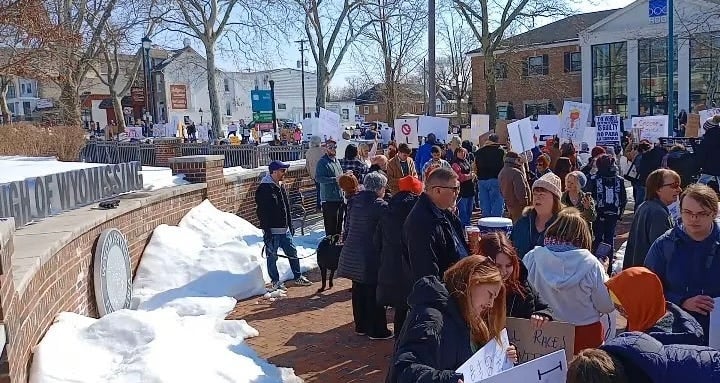
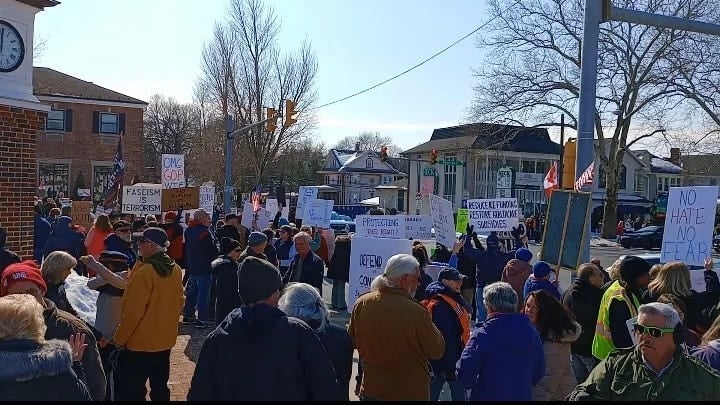
All across the country, people are standing up and voicing their anger toward the Trump Admin. Change is the point of voice, and independent journalists have a duty to share the stories of those who show up and stand out. Now is the time to voice and protest. Millions of working-class people are struggling to make ends meet and are one financial crisis away from collapse, yet the Trump administration has promised financial stability for families.
Trump, during his campaign, promised he would remove violent crime offenders from the communities, but many knew this was a dogwhistle of racism toward black and brown people. Many families are in fear, and the government is attacking the sanctity of American freedom.
Diana L. Adams-Wendler (Protester)Diana L. Adams-Wendler (Protester)Diana L. Adams-Wendler (Protester)
This episode is about the foundations of community action and fighting for the equality of all neighbors.
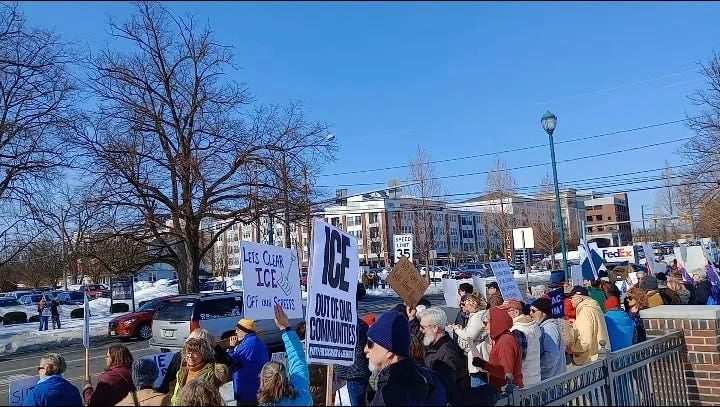
Penelope explores the opinions and righteous voice of Marra, a first-time protestor from Sparta, NJ, who contributed to the Ledgewood Ice protest, which attracted over 300 people from not only Ledgewood but the greater community, fighting to avoid the construction of a five-hundred-thousand-square-foot ICE facility that the federal government is attempting to implement in Roxbury, NJ.
Marra, Summit NJ Resident, First Time Protester
Marra – Ledgewood, NJ, Protestor, working-class perspective, an audio history of events transpiring for active change in New Jersey, transcribed.
Here is the transcript of the Penny Pointed Podcast between Penelope and Marra:
Podcast Transcript
Penelope: Thank you for tuning in. You’re listening to the Penny Tribune, Penny Pointed Podcast, a podcast about holding politicians accountable, exposing corruption, and sharing the stories and perspectives of working-class people and families. Today, we’re covering topics about ICE raids and protests happening across the state. My name is Penelope. I’m here with Marra, who attended the Ledgewood protest, and we’re going to talk about the outcomes and opinions and what to do in situations like this. So, Marra, thank you so much for giving me your time today. And first, I wanted to start with where you’re located, how you found the protest, and what has been your journey politically with activism.
Marra: Sure, no problem. Thank you for checking in. I’m actually a resident of Sparta, New Jersey, so I live in Sussex County, which is very well known as a red county. And I found the protest through Sussex Visibility Brigade, which my friend introduced to me, actually, pretty recently. I would say that I haven’t really been looking too far into where I can find such activism in our county because, again, it’s red. But when I saw this protest, this was actually my first protest I ever went to. So this is like a new thing for me to really start stepping out of my comfort zone and showing up and speaking up more just because of what we’ve seen in the last year in our country and with what this protest in Ledgewood was for, protesting against the potential sale of a warehouse in Roxbury that would become a detention center for ICE and what that would do to northern New Jersey, not just the town of Roxbury, but all of the neighboring towns in New Jersey. I just felt like I needed to be there. I needed to see other like-minded people outside with me, so I didn’t feel so alone in my fears about what’s been going on.
Penelope: Yeah, that’s understandable right now. There’s so much uncertainty, and I mean, I’m sure you saw everything in Minneapolis with Operation Metro Surge, and in New Jersey, ICE activity is picking up like extremely rapidly, and we’ve already had a shooting in New Jersey. Yeah, so things are escalating, and so many people are scared like you, and so many people are just frightened about what’s going to happen and angry, like rightfully so. And so, did you always live in Sparta? Growing up, what were your views on immigration and political policies? Like, how did you develop into these viewpoints to understand, like, social justice and getting involved?
Marra: So I grew up in Sussex County. I’m originally from Vernon. My husband is originally from Vernon, and we moved to Sparta once we got married. You know, I don’t know. I feel like growing up in Sussex County, there was this bubble, and I think it also depended upon how you were raised. I wouldn’t say that I wasn’t aware of how problematic our county and our country could be, but I definitely will admit to my privilege and my ignorance for a very long time. I’m fine with saying that. I think it’s honesty. But I do feel like I was always someone who couldn’t understand why people were so cruel and why racism was still so prominent. I went to college in New York City. I went to a technical school where people from every part of the world came. You know, it was a big LGBTQIA school. I was just immersed around people and just nothing any of them can do, whether you’re black, you’re brown, you’re gay, you’re bi, or trans, I don’t understand how people are so offended and can be so cruel. And I just think seeing it more now, seeing an administration that’s governing our country and using such vile language and speech against such large communities and taking all of the racism that’s been under the surface and letting it boil to the top and letting it be almost okay is just, it’s abhorrent and I guess I’m just at this point where the anger is, I can’t fully contain it anymore and it’s just being around so many people whose heads are down, they don’t want to disrupt status quo. It’s taken a lot of me looking inside myself, distancing from family and friends. So like I think there was always a little bit of the angry person in me wanting to fight back against people hurting other people and I just now is the time that it calls for more of us to stand up.
Penelope: Would you say everyday people and us being part of the working class, like what would you say our duty is to stand up and with the non-citizen population being less than 14% of violent crime or criminal offenders and Donald Trump’s admin saying that they’re only going after criminals, but now we see just like families being torn apart like what happened in Lindenwold where ICE decided to visit a bus stop for fourth and fifth graders and families were running, parents were alerting their neighbors? And how do you think this is all affecting, like, families and just the outright propaganda and fascism that’s happening right now?
Marra: I would hope that families, especially in my area, who I feel generally don’t talk about anything, are starting to wake up more to it. And look to just what was happening in Minnesota the last two months to see the damage that is being done. I mean, everything is being recorded. I cannot understand how people can look away from a video of a mother holding a baby as their dad is being dragged off. You know, I just it’s crazy to me and I would hope that I would hope that I could have more space in feel talking to coworkers or friends of friends to just say you need to take a look around you, like this could be anyone and everyone in your community and it’s affecting all of us because of the way that they’re being treated and the violent way with which they’re being kidnapped off of the street. It directly impacts all of us.
Penelope: When you were at the protest, what was the atmosphere like? Did you talk to anyone? What were the key points that were addressed?
Marra: So being my first protest, a little nervous, wasn’t sure what to expect. I actually thought it was going to be a smaller protest based off of just looking at the ad on Instagram, seeing that there weren’t a lot of likes. But showing up there, I went with two friends, and we got there, and it was larger than I thought it was going to be, and it was peaceful, and everyone was friendly. Everyone was, you know, willing to talk about their fears about what this if the sale of the warehouse could go through could mean. There were about four speakers. They were either from a union or a councilperson. One was a councilperson from Sparta who spoke on behalf of himself, not for Sparta Township. And they just rolled out the facts about what this could mean for Roxbury and the neighboring towns from an environmental standpoint, from a financial standpoint, you know, moral and ethics aside. So I think that was really important for them to reiterate that point of why we went there on Monday for the protest. And you know, like there was for every one car that drove by flipping us off or yelling bad words at us, there were ten more cars honking in support and that felt to me like that I just it gave me some hope we’re not alone. People that feel afraid and angered and worried and concerned that there are groups of us that are feeling it together and I think just showing up on Monday probably maybe 300 people, I don’t know exactly. I think seeing that number was was really great.
Penelope: How do you think protests like this inspire change in communities to take action?
Marra: I think the more people that show up and the bigger the protests are, I think this woman standing next to me on Monday, she had made a comment that sometimes like she feels that maybe protests don’t always work, but at least showing up in numbers it shows the people that we’re paying to govern us and pass our laws, it shows them that we’re watching them and that we see them. We’re like the checks and balances for them. So I think the more people that can make time to do protests or you know find other avenues of activism, I know Sussex Visibility Brigade, they were doing like a craft night where it was assembling whistles and things like that. Doing those small things and getting larger numbers to do them shows that we’re watching government and we’re looking for change.
Penelope: What changes do you think need to happen and how can you inspire your community members to make those changes?
Marra: Changes… a lot. I mean I guess when I’m looking at Sussex County, it’s still very antiquated in old thinking up here. I think a younger generation will push for more progressive thinking and I already see it with my friend’s kids, my nieces and nephews, they’re whole more accepting of everyone and I think we need to get I think we need to get younger people in leadership roles. They bring fresh perspective. I think they have, you know, a more open view of the world and I would hope that now that I’ve attended one protest that I could attend more and become more active, maybe with Sussex Visibility Brigade, and just step up more. I know it’s holding myself accountable and stepping up more.
Penelope: Awesome. Yeah. What do you think independent journalists like me, what is our responsibility to like show up for communities and tell the stories of what’s happening?
Marra: I think independent journalists like you are more important now than ever just based off of how much information we’re not getting from bigger journalists because their information is getting suppressed. I think it’s important that independent journalists remain open and honest, do their due diligence with research and you know show up for the people because I feel like bigger news now, I can’t I you can’t rely on them for it. And I came across you on Threads, seeing that you’re from New Jersey, seeing that you’re reporting what’s happening locally around us. You know, I’m not going to get that from a big news channel. I only get it from independent people.
Penelope: Yeah, yeah, that’s journalism is under attack right now by the Trump admin and it’s such a scary place to be but it’s definitely worth it to make sure truth is out and do you think the politicians in New Jersey are actually representing the people like Corey Booker and Governor Cheryl?
Marra: I’m wary. I’m not feeling great about Booker right now. I feel like I’m seeing that a lot. It just feels like he’s become very performative and I don’t know when that actually changed. My hope is that Governor Cheryl will be a good governor. I do like that she’s already been proactive as far as some of the executive orders and initiatives she’s taken with ICE in New Jersey. Can only hope for the best. But yeah, I there are some New Jersey reps that I am a little bit worried as far as where they really stand and I think Corey Booker is the biggest one because he’s been around for so long. I sometimes think that maybe and I voted for him a few times so I think that I don’t know is it that you get to a certain point and you’ve exhausted your seat and it’s time to let somebody else step up? I think there’s a lot of questions he needs to answer. I don’t know if he’s doing that because he’s on a book tour. But I think that people of New Jersey want answers. I know we’re a blue state but we have a lot of red areas and we just need we just we just need answers.
Penelope: Yeah. What are some small changes communities can do to protect the non-citizen population and what has been your personal experience with someone who’s non-citizen?
Marra: So I think well, I’ll take it from a business standpoint. I work in HR, so we deal with, you know, people and their documents coming in, making sure that they’re correct and stressing for them to get appropriate documents and following the correct path to get them. I think for small towns and communities up where I live, I think it’s a matter of speaking up, definitely getting more active in the community. That’s something I’m not and I think it’s hard too because I don’t have children. So in towns where I live, it feels like the people that run the show are parents. So for someone who’s child-free, it feels a little isolated.
Penelope: Yeah. So much is going on and these protests are making news and I mean, Minnesota made national news, but we’re seeing unprecedented numbers with ICE in New Jersey. And I know the Trump admin has been retaliating because Jack didn’t win the election and I just want to thank you for taking time to answer this call and give your perspective. The working-class view is so important with everything happening. We are the voters and our politicians should show up for us and govern and make policy and right now so much is going on with non-citizen people and it’s just it’s horrendous how they’re being treated. So I echo everything and I’m so thankful for you sharing your views and for everyone listening, Marra shared all of her views from Ledgewood and why we all need to be involved. So thank you for taking this call.
Marra: Thank you for speaking with me. Hopefully didn’t sound too ridiculous, this was stepping out of my comfort zone, so…
Penelope: Yeah, it’s I it was great conversation and I think people are going to resonate with everything you said. More people are supportive of rights for non-citizens as opposed to the radical MAGA ideology that is so inhuman.
Marra: Yeah.
Penelope: All right. Well, we can end here. I’m so excited to share what you have to say and the pictures you shared and everything and I’m so excited you got involved and you’re speaking up. It’s so important for working-class people to be heard and I can’t wait to share this with everyone.
Estefany María Rodríguez Florez fled death threats in Colombia, followed all legal procedures in the U.S., and was detained by federal agents the morning after covering an ICE raid. A federal judge is now demanding answers, and so are we.
Let’s clarify what actually happened, as the government is trying to obscure it.
On March 4, a Nashville Fugitive Operations Team — a surveillance unit, not a patrol — followed Rodríguez, her husband, and their seven-year-old daughter from their home. They waited until the daughter was at her bus stop, then surrounded their car, which bore their news outlet Nashville Noticias logo, and took Rodríguez into custody. No warrant was shown, and her husband, a U.S. citizen, wasn’t given an explanation.
Her name is Estefany María Rodríguez Florez. The day before her arrest, she was reporting on ICE agents detaining a man in a Nashville parking lot.
This is not coincidental. Her lawyers, the Tennessee Immigrant and Refugee Rights Coalition, a retired immigration judge, and a federal judge — who has ordered the government to clarify her detention by Monday — all agree something is amiss.
Who Is Estefany Rodríguez, and Why Does That Matter?
Rodríguez, 35, holds a journalism degree from Colombia, where she reported on government corruption, armed groups, and agencies, which earned her death threats. These threats were serious enough to warrant police involvement and a security detail. Clearly putting a target on Rodríguez.
When her daughter was one, she moved legally to the U.S. on a tourist visa in March 2021. Before its expiry, she filed for asylum internally, as permitted by law, and married a U.S. citizen, applying for permanent residency. During a time when most of the government was stressed from a pandemic she followed the rules to stay. Yet the government now is trying to force her to leave. She now has a work permit valid through 2029.
In 2022, she joined Nashville Noticias and reported for Univision 42 Nashville, covering social issues, families, health, police, and immigration — especially ICE enforcement in Middle Tennessee. The TIRRC praised her for courageously telling about the harms caused by ICE. Journalism written for the voice of Latino communities proves to bring notice and awareness in an understanding way that Latino readers engage with when participating in their community and exercising political rights.
Her attorney, Joel Coxander, noted that she always understood she might be detained simply for being present at enforcement operations, yet she reported on them anyway. ICE classified her as a fugitive.
Why the Location of Her Arrest Matters
Rodríguez was detained at a gym on Murfreesboro Pike — a diverse community in Antioch and South Nashville.
This area’s demographics include 35.3% Black, 32.2% White, and 22.1% Hispanic residents. The Hispanic population here is more than twice Nashville’s citywide average, and a large percentage of schoolchildren are Hispanic, indicating a community shift. Nearly 29% of residents are foreign-born, more than doubling the metro average. Over a third speak a non-English language at home, mostly Spanish. With a large population speaking languages other than English, there is a barrier to every aspect of community use.
The median household income is $72,233, and about 10.7% of families live in poverty. Median household size is slightly above average at 2.5 people. A clear indication of a diverse community and the known threat of ICE activity from the Trump administration.
These are working-class families — including immigrants, many undocumented or in the process of immigration. Rodríguez’s reporting focused on her local community, not outsiders covering a foreign crisis. This distinction is crucial for understanding her work and why the government may have wanted to stop her.
The Setup: Two Appointments ICE Can’t Explain
ICE’s justification for calling Rodríguez a “flight risk” hinges on a story that unravels under scrutiny.
In January 2026, ICE requested her appearance at their Nashville office. Winter Storm Fern canceled the appointment, and ICE rescheduled for February 26. Her husband and her attorney’s office checked, and the agency said she wasn’t in the system and shouldn’t come. A new appointment was set for March 17.
ICE then used these missed appointments to justify her detention and arrest.
Her attorney explained, –
“She’s being told, ‘We’re holding it against you that you didn’t do this thing we told you you didn’t have to do,’”
-and noted her team went to ICE ahead of the appointment.
The Warrant Issue: A Crumpled Photo
When her attorneys challenged the warrantless arrest, ICE responded with a photo of a crumpled warrant dated March 2 — two days before the arrest. The document lacks a file number, and the certificate of service is blank, indicating it was never served.
Records confirm she was never presented with a warrant from the moment she left her home until her detention.
Her lawyers called it an “unserved, unexecuted, and crumpled-into-a-ball warrant,” offering no legal cover. The government disputes this, and a judge is now examining the matter.
Retaliation, Press Freedom, and a Pattern
The Columbia Journalism Review highlighted a concerning pattern: journalists like Rodríguez working for Spanish-language outlets, with less prominence, covering immigrant communities and facing potential risks from enforcement actions.
State Rep. John Ray Clemmons called her arrest alarming, especially given her reporting on anti-immigrant laws. Rebbeca Aguilar, a longtime journalist, emphasized that all journalists must do their work without fear of retaliation.
Her attorneys have asked the court to declare her arrest a First Amendment violation. The case is actively being considered.
Her Current Status and What’s at Risk
Rodríguez is held at Etowah County Jail in Alabama, with plans to transfer her to Louisiana. Her husband, Alejandro Medina III, hasn’t spoken with her since her detention, and he is urgently trying to reunite with her so they can finally take their postponed honeymoon.
Her daughter waits, and her scheduled green card appointment on March 17 can’t proceed while she’s detained.
A judge has demanded the government justify her continued detention in writing by Monday midnight. A hearing could happen as soon as Tuesday.
Understand that ICE detains more people than ever, with over 70,000 held in January 2026 — a 75% increase from the previous year, with higher arrest rates and community arrests skyrocketing. Most detainees have no criminal convictions.
This case exemplifies how enforcement policies affect real lives — in a community along Murfreesboro Pike, where many families are building lives and hopes, now threatened by unjust detention based on a flawed warrant and administrative mishandling.
The court has until Tuesday to rule. We will keep reporting on what unfolds next.
On March 5th, 2026, Trump issued a statement announcing that Kristi Noem would be leaving her position. Noem has been under fire for her mishandling of the deaths of two American citizens during the ICE operation “Metro Surge” that resulted in the deaths of Alex Pretti and Renee Good. During the first year of Trump’s second term, Noem served as the Secretary of the Department of Homeland Security, an agency that the American people strongly protested for its conduct on immigration policies.
Noem came under the latest scrutiny during her congressional hearing. In the hearing, lawmakers asked Noem why she used $220 million in taxpayer money to fund an ad campaign she said Trump personally approved.
Trump told Reuters on Thursday, “I never knew anything about the ad campaign.”
Secretary of Homeland Security Kristi Noem filming an ad at Mount Rushmore National Memorial in South Dakota, Oct. 2, 2025. Tia Dufour | DHS
The most significant legal and political consequences revolve around Governor Noem’s testimony about her top aide, Corey Lewandowski. When questioned about whether Lewandowski had a role in approving Department of Homeland Security (DHS) contracts, she responded with a flat “No.” However, internal DHS records and ProPublica reports later revealed his signature on multimillion-dollar contract routing sheets. This has led to accusations that she lied under oath.
Noem sparked a lively debate after her comments on two U.S. citizens, Alex Pretti and Renee Good, tragically shot by federal agents in Minneapolis. Even amidst significant pushback and conflicting evidence, she stood firm in her stance, choosing not to apologize for calling them “domestic terrorists.”
Noem has a legacy defined in mistrust and a lack of transparency for the American people, who have fought since the beginning of the second term of Donald Trump for accountability of ICE agents and internal policies.
Amid widespread resident outrage over a warehouse sale, New Jersey residents stand against ICE in Roxbury. DG Roxbury Property Owner, L.P., linked to Dallas-based Dalfen Industrial and a Goldman Sachs asset management fund, sold a 470,000-square-foot warehouse at 1879 Route 46 in Roxbury to the U.S. Department of Homeland Security for ICE. The deal closed on February 19, 2026, for $129.3 million, raising concerns about the local community’s future and the influence of corporate and financial interests. The protest drew over 150 people from Roxbury and neighboring towns. With signs held up that said NO ICE and referencing the disgraced Trump admin as equal to nazis many spoke up for what they believed in.
Credit: No ICE North Jersey Alliance. Aerial view of the Roxbury warehouse sold to ICE.
Roxbury Township in Morris County, NJ, is a suburban area with about 23,111 residents as of 2023 and an average age of 43.3. The community is mostly white, comprising roughly 71-80% of the population, and has a median household income of over $130,000. The poverty rate is low, at approximately 5.4%.
The call is clear: get ICE out of New Jersey. The GSA, which oversees the sale and leasing of property, has been contacted and requested documents related to the sale of the warehouse. The agency responded to the request and alerted The Penny Tribune that they will try to release the documents pertaining to another property in Roseland, NJ, as well as the detention facility in Newark, NJ. The GSA confirmed this on February 19th 2026, they would release the files.
A video submitted by a protester shows them walking up to the group of people. A line formed along the street as drivers passed by, witnessing their community standing up for the non-citizen population.
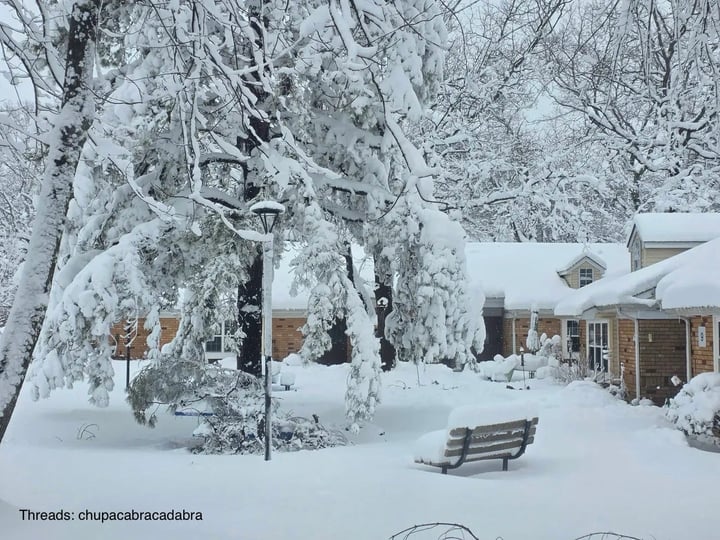
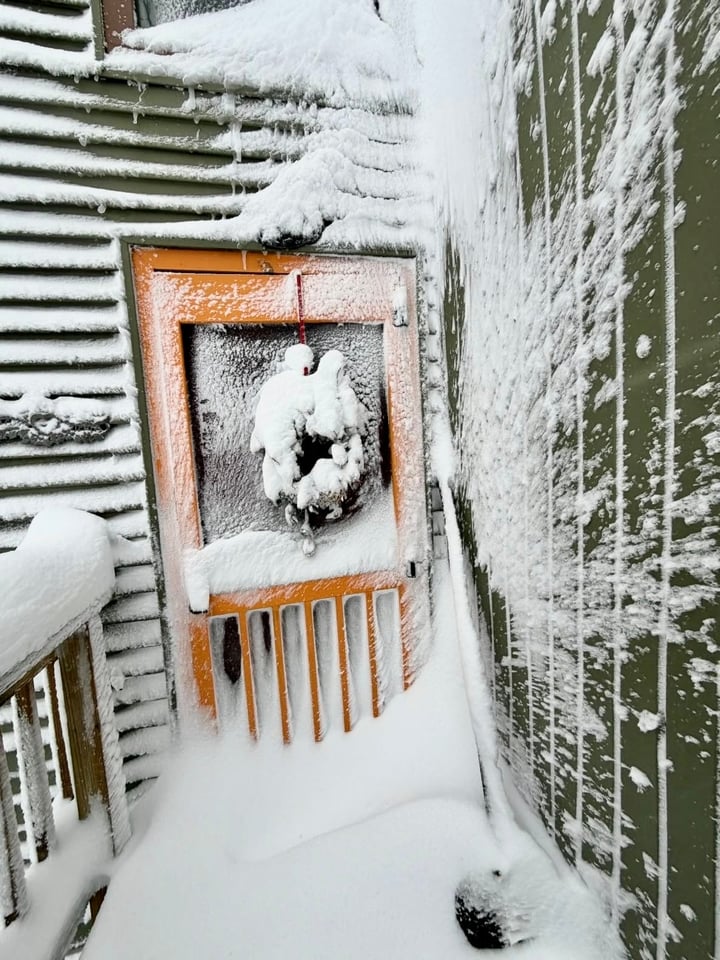
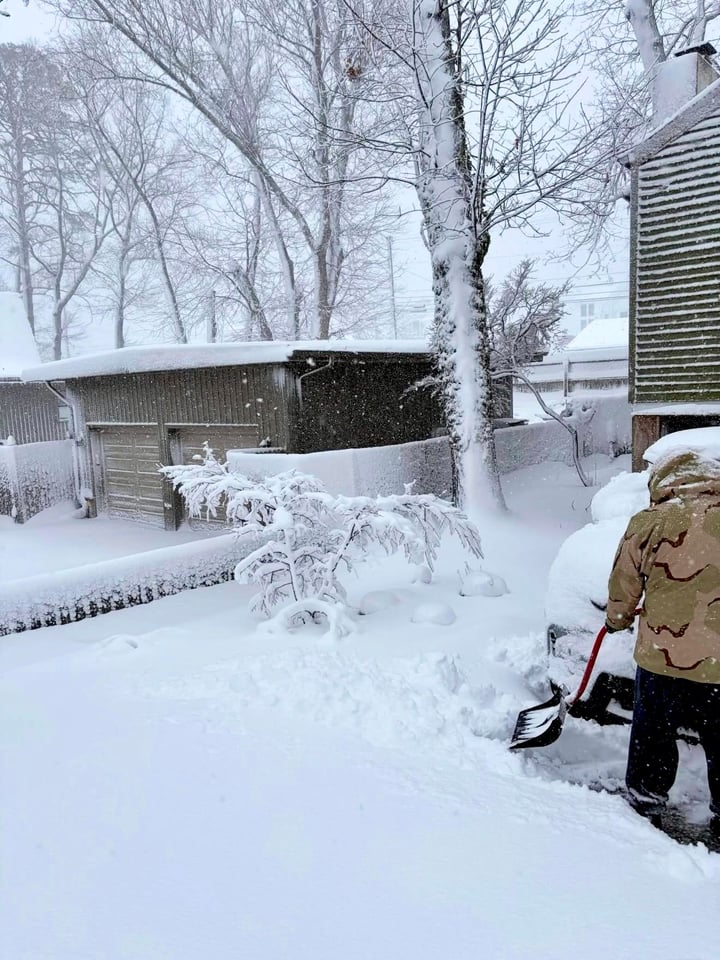
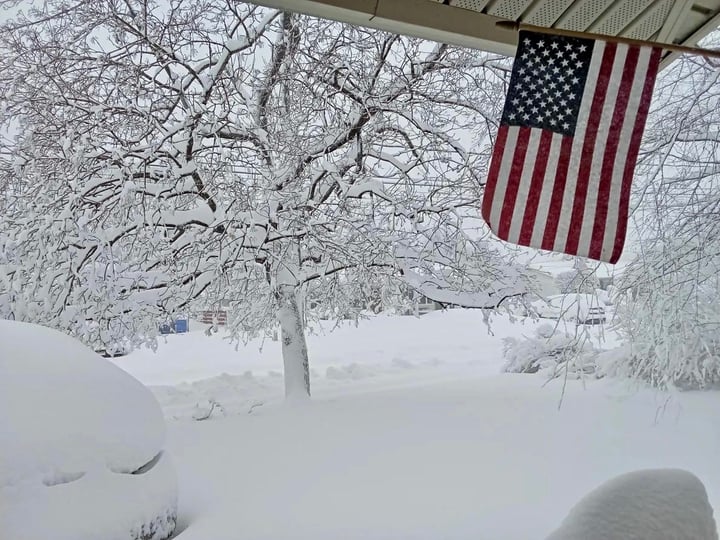
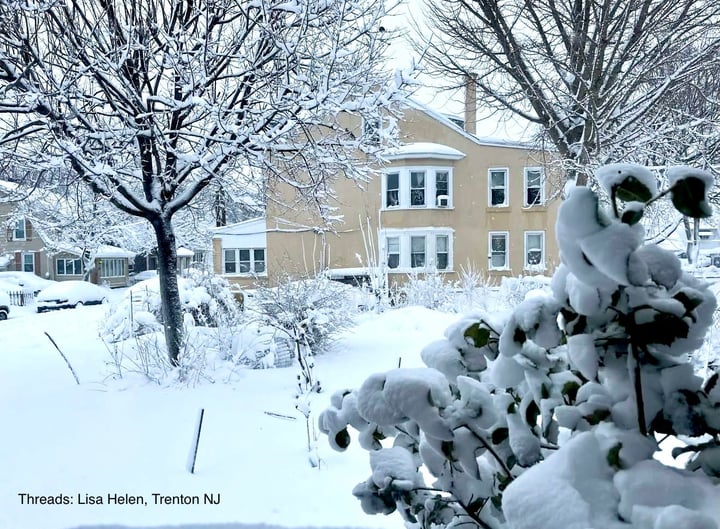
The last statewide state of emergency occurred in 1996. New Jersey has not seen snowfall totals like the February 2026 blizzard since 2021.
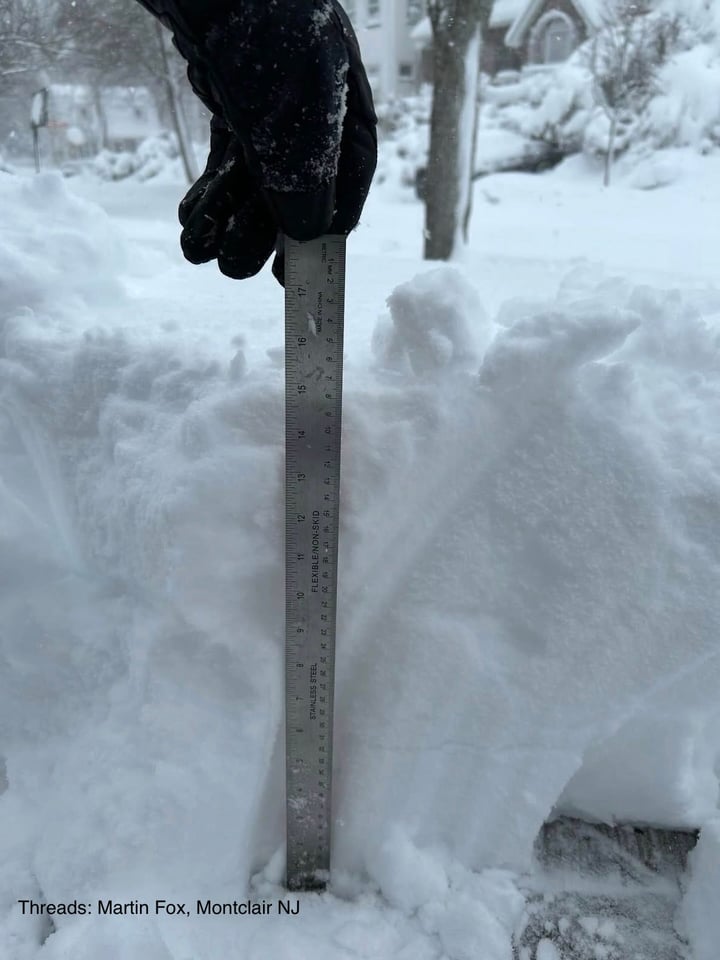
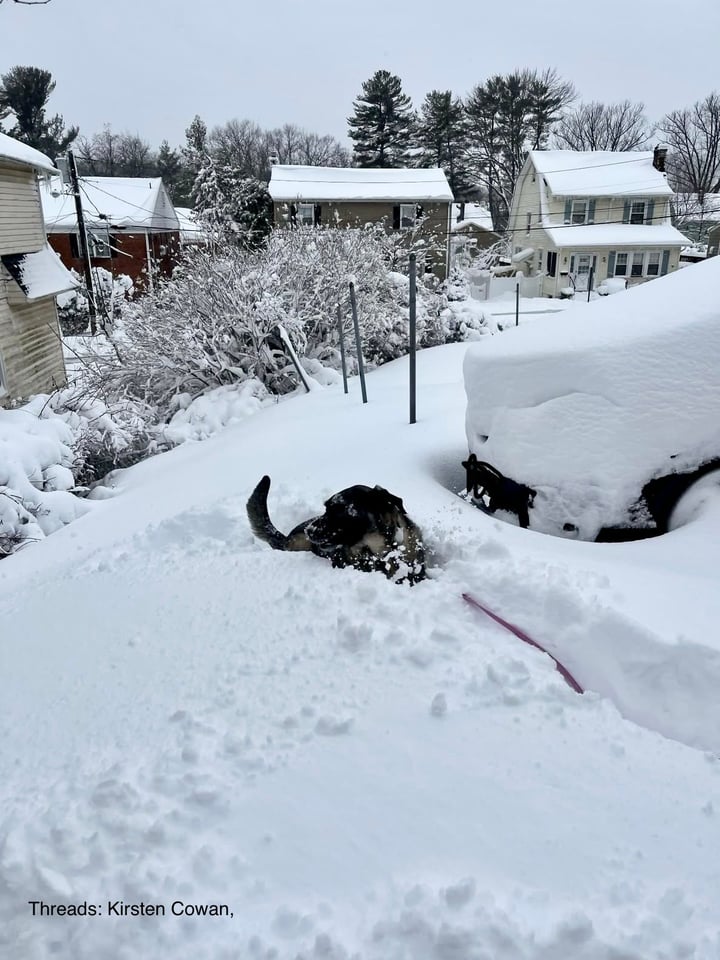
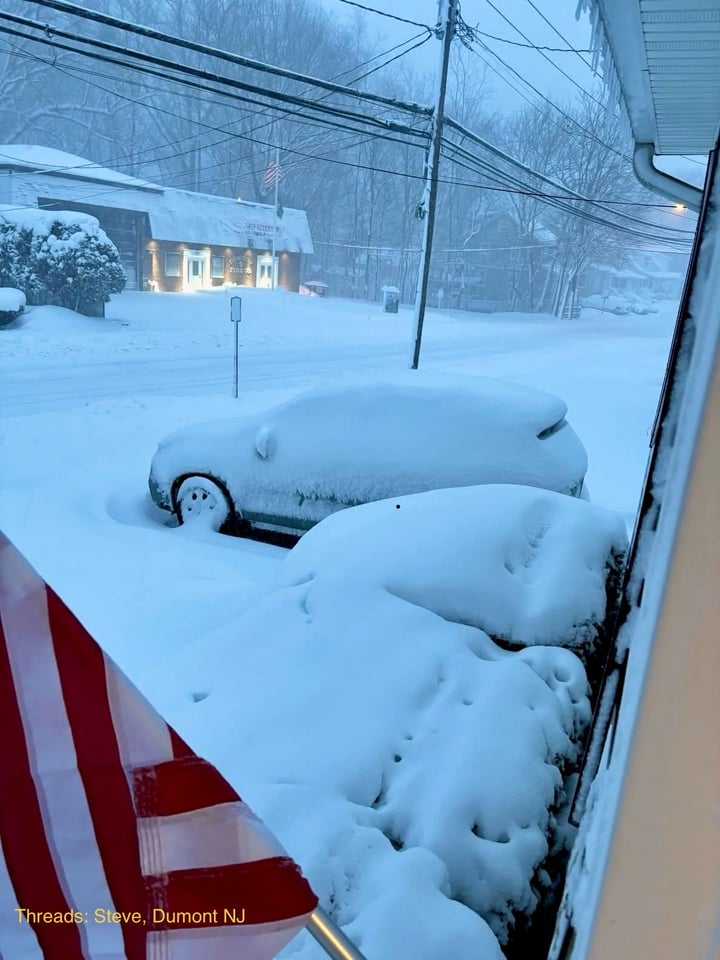
The Garden State saw record snowfall over the weekend and into the early week beginning February 22nd, 2026, through Monday. Executive Order No. 45 was issued on January 8, 1996, for severe weather, terminating on January 13, 1996. Thirty years ago, the entire state was placed under a state of emergency due to blizzard warnings. Three decades later, the state is under extreme conditions with a majority of the state receiving at least fifteen inches of snow. Record-breaking numbers with some areas receiving over thirty inches. In 1996, the turnpike closed for the first time in its history. This time in 2026, crews worked around the clock to ensure everyone’s safety. With a ban on all travel except for essential workers, many used roadways to reach their jobs. Below is a photo of the Garden State Parkway near mile marker 83, with a crew clearing snow buildup and salting the roadways.
Lyndhurst, NJ, saw 30.7 inches of snow, a record for the area. Many other parts of New Jersey saw power outages, with over 150,000 people without power, according to energy provider Jersey Central Power & Light. Over 2,000 flights have been cancelled since the storm began, causing chaos for travellers who need to travel for events such as family emergencies, work, and pleasure.
Users on Threads submitted photos showing the magnitude of the storm.